
Free Family Game Night Ideas to Try With Your Kids


Family game night does not need a shelf of expensive board games. Some of the best nights happen with a deck of cards, a pad of paper, a few cushions and a kid who has just figured out that they can beat a parent fair and square.

This guide is packed with free family game night ideas you can start tonight using things already in your home. You will find games sorted by type and age, a simple plan for running the evening, tips for including teens and toddlers at the same table, and the small mistakes that quietly turn fun into fights.
Why Family Game Night Is Worth the Effort
After a long day, it is tempting to let everyone drift to their own screen. A weekly game night pushes back against that in a way kids actually look forward to.
There is solid science behind it, too. Pediatricians have described how play and games help children thrive, from building language and math skills to helping kids cope with stress. Their key point is that playing with parents strengthens the parent and child bond in a way solo screen time cannot.
Games also train what researchers call executive function: memory, focus and self-control. The child development team at Harvard has an excellent age-by-age activities guide for building executive function skills, and many of its suggestions are simple card games, memory games and movement games. Waiting your turn, remembering where the matching card was, and losing without flipping the table are all skills in disguise.
What Kids Quietly Learn at the Game Table
- Patience, by waiting for their turn.
- Counting and quick math, by tallying points and moving pieces.
- Strategy, by planning a move or two ahead.
- Resilience, by losing and trying again next round.
- Communication, by explaining, bluffing and negotiating.
Free Family Game Night Ideas You Can Play Tonight

Every game below needs nothing more than common household items. Mix two or three types in one evening so everyone gets a turn at something they are good at.
Classic Card Games With One Deck
A single deck of cards is the most versatile game kit you own. If you forget the rules, a well-known free card game rules library explains hundreds of games, from simple matching games to strategy classics.
- Go Fish for ages 4 and up. Great for learning numbers and asking politely.
- Crazy Eights for ages 6 and up. Easy to learn, with just enough strategy.
- War for the youngest players. Pure luck, so little kids can beat adults.
- Memory (Concentration) for ages 3 and up. Lay cards face down and find pairs.
- Spoons for ages 7 and up. Loud, fast and full of laughter. Use spoons from the kitchen drawer.
- Slapjack for ages 5 and up. Quick reflexes win, which evens the playing field.
Paper and Pencil Games
- Pictionary using scrap paper and words written on folded slips.
- Hangman with a family theme, like favorite foods or holiday spots.
- Dots and Boxes for quiet strategy at any age.
- Scattergories at home. Pick a letter and list a fruit, animal, country and name in 60 seconds.
- Consequences, where each person adds a line to a silly story without seeing the rest.
Word and Guessing Games
- Charades sorted into easy picture cards for little ones and movie titles for older kids.
- 20 Questions, perfect for car rides as well as game night.
- Would You Rather with kid-friendly prompts like “fly or be invisible?”
- I Spy with a twist: describe the color, shape and room before anyone guesses.
- The Alphabet Game. Go around the circle naming animals from A to Z.
Active Games for Living Room Energy
- Freeze Dance. One person controls the music and everyone freezes when it stops.
- Simon Says, which is secretly excellent practice for listening and self-control.
- Indoor Scavenger Hunt. Hide ten household objects and hand out a clue list.
- Balloon Volleyball. Tie a string between two chairs and keep the balloon off the floor.
- Pillow Obstacle Course. Time each person and try to beat your best.
Teamwork and Creative Games
Splitting into teams changes the mood. Kids love being on a parent’s side, and mixed teams stop the oldest child from winning every round. Let a team generator wheel pick the teams so nobody can say it was unfair.
- Story Chain. Each person adds one sentence to a shared story.
- Family Trivia Night. Write questions about each other, such as “What was Dad’s first job?”
- Build-Off Challenge. Give each team the same pile of cups, paper or blocks and 10 minutes to build the tallest tower.
- Talent Show Round. Everyone gets 60 seconds to perform anything.
Turn Board Games You Already Own Into Something New
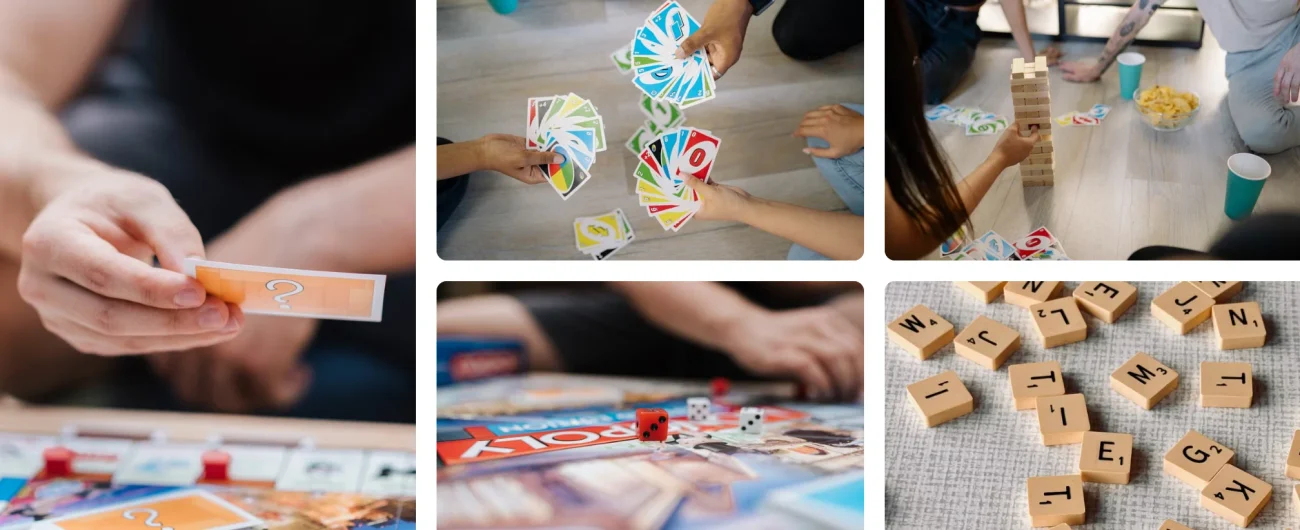
Lost dice are the classic game night disaster. A digital dice roller on a phone fills the gap in seconds. You can also refresh old board games with house rules: play Monopoly with a one-hour timer, or play Scrabble where any word about your family scores double.
Best Game Night Ideas by Age
| Age Group | Great Free Games | Why They Work |
|---|---|---|
| 3 to 5 years | Memory, I Spy, Freeze Dance, War | Short rounds, simple rules, lots of movement |
| 6 to 8 years | Go Fish, Crazy Eights, Charades, Scavenger Hunt | Early strategy and reading practice |
| 9 to 12 years | Spoons, Pictionary, Scattergories, Family Trivia | Faster pace and friendly competition |
| Teens | Would You Rather, Story Chain, Trivia, Build-Off | Humor, creativity and a chance to beat parents |
| Mixed ages | Charades, Balloon Volleyball, Team Trivia | Teams let everyone contribute |
How to Plan a Family Game Night That Kids Ask For Again
The games matter less than the rhythm of the evening. A little structure keeps things fun instead of chaotic.
- Pick a fixed night. Friday or Sunday evenings work for most families. Consistency turns it into a tradition kids defend.
- Keep it to 60 to 90 minutes. End while everyone is still having fun, not after the first meltdown.
- Rotate who chooses. Each week, a different family member picks the first game.
- Start easy, finish loud. Open with a calm card game, move to something active, then wind down.
- Add simple snacks. Popcorn, fruit slices or homemade pizza make it feel special without cost.
- Close with a ritual. A quick “best moment of the night” round, or a short family movie to wind down. If nobody can agree on what to watch, a movie genre spinner ends the debate quickly.
Set a Few Ground Rules Before You Start
- Everyone plays at least one round, including parents.
- Explain the rules once, then play a practice round.
- Celebrate good moves, not just wins.
- Losing is allowed. Sulking gets a 2-minute break, not the end of the game.
- No phones at the table, except for timers or dice apps.
Handling Screens Without a Fight
Screens are not the enemy, but they compete for attention. Many families find it easier when screen rules are written down ahead of time rather than argued about in the moment. Pediatricians offer a free, customizable family media plan that lets you mark game night as a screen-free time.
That said, a shared video game can be part of the fun once in a while, especially for teens. Pick something cooperative that everyone can join. These mobile games that are fun to play with friends work just as well with family when everyone is in the same room.
How to Get Teens to Join In
Teens often roll their eyes at first, then turn out to be the most competitive players at the table. A few tricks help:
- Let them host or pick the game for the night.
- Choose games that reward humor, such as Would You Rather or Pictionary.
- Allow a friend to join occasionally.
- Give them a role, such as scorekeeper or quiz master.
- Never force it. A teen who joins halfway through is still a win.
Making It Work With Little Kids and Big Kids Together
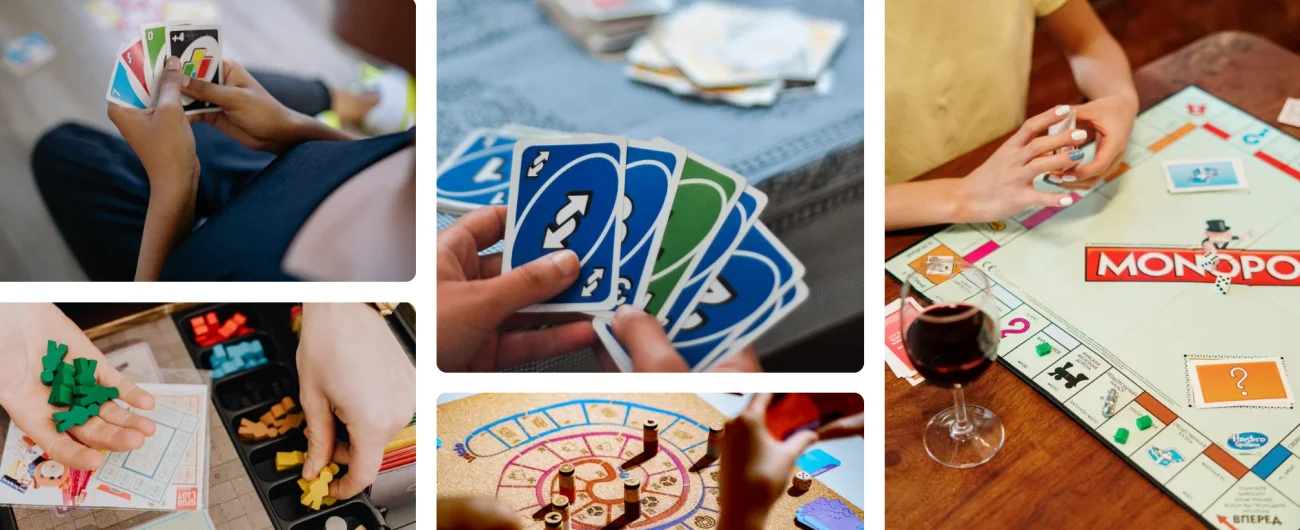
The biggest challenge in mixed-age families is balance. Pair younger kids with an older sibling or parent as a team. Choose luck-based games, such as War or Memory, where age matters less. Give the youngest special jobs, such as rolling the dice or reading the timer, so they feel important even when the strategy goes over their heads.
Common Game Night Mistakes to Avoid
- Letting kids win every time. It feels kind, but it takes away the joy of a real win. Adjust the difficulty instead, for example by giving a younger child a head start.
- Picking games that are too long. A two-hour strategy game can drain small children. Save it for when the kids are older.
- Over-explaining the rules. Kids learn faster by playing. Teach the basics and fill in details as you go.
- Parents half playing while checking phones. Kids notice. Full attention for one hour beats distracted attention for three.
- Making it feel like a chore. If a night is not working, switch to a silly game or end early. There is always next week.
Frequently Asked Questions
What Are the Best Free Family Game Night Ideas?
Card games like Go Fish and Spoons, guessing games like Charades and 20 Questions, and active games like Freeze Dance and a scavenger hunt. All need only household items.
How Often Should We Have Family Game Night?
Once a week is a great goal. If that is too much, aim for every other week. Consistency matters more than frequency.
How Do I Stop Arguments During Games?
Agree on rules before you start, use teams to balance skill levels, and praise good sportsmanship out loud. A short break works better than ending the night.
What Games Work for Toddlers?
Memory with a few pairs of cards, I Spy, simple hide and seek, Freeze Dance and color sorting games. Keep rounds under five minutes.
Can Video Games Count as Family Game Night?
Yes, occasionally, as long as everyone plays together in the same room. Cooperative games that need teamwork work best.
Summary
The magic of family game night is not in the box. It is in the inside jokes, the triumphant shouts and the stories your kids will retell years from now. Grab a deck of cards, clear the table and start this week. Keep it short, keep it silly and keep showing up. That is the whole secret.
Note: Choose games that suit your children’s ages and abilities, and supervise young kids with small items like dice or balloons.