
How to Plan a Micro Adventure in Your City Today

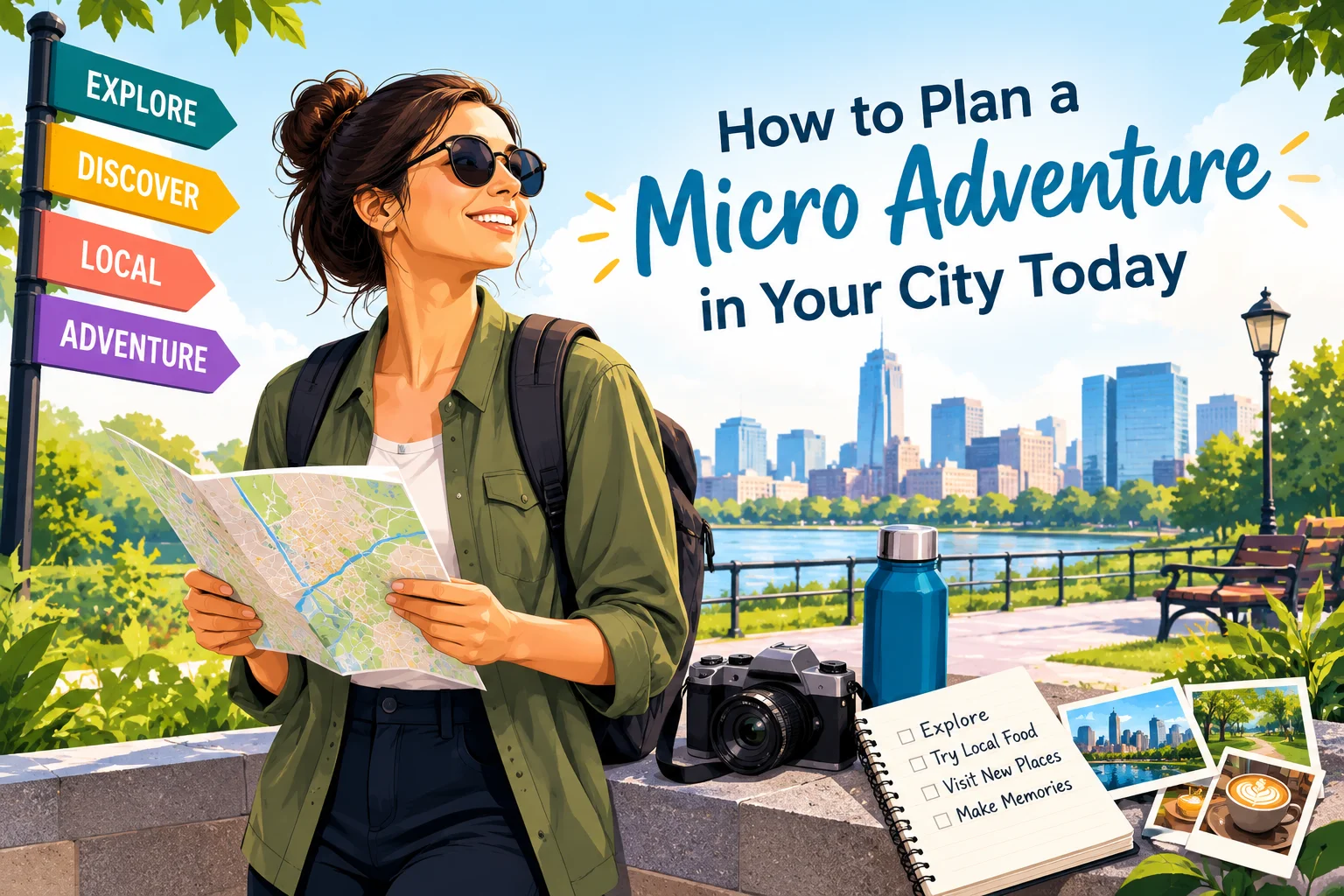
Most of us think an adventure needs a plane ticket, a week of leave and a backpack the size of a refrigerator. Then the advweekend arrives, we’re tired, and nothing happens. A micro adventure fixes that. It’s a small, low-cost outing, a few hours or even less, that gives you the feeling of having gone somewhere without going far.
If you’ve been feeling flat, overscheduled or stuck in the same loop of home, work and screen, a micro adventure is one of the simplest ways to break it. Here is how to plan one today, with enough structure to make it happen and enough looseness to make it fun.
What Counts as a Micro Adventure?
A micro adventure has three ingredients: it’s close, it’s short, and it’s a little different from your routine. That’s the whole definition. You don’t need to be fit, outdoorsy or brave.

It might be walking home by a route you’ve never taken, watching the sunset from a rooftop or a pier, eating breakfast at a market you’ve always driven past, or following a river, canal or old railway line to see where it goes. The point isn’t distance or difficulty. It’s attention. You’re treating your own city like a place you’re visiting.
Why It’s Worth Your Time
This isn’t only about novelty. Regular physical activity supports mental health, sleep and heart health, and the Organization’s physical activity facts is clear that even modest movement adds up. A micro adventure tends to sneak in a walk without feeling like exercise, which is why people stick with it.
The mental side matters too. The National Institute of Mental Health notes that small habits like getting outside and staying active</a> can support how you feel day to day. A micro adventure won’t replace professional care if you’re struggling, but it can be a gentle, practical part of looking after yourself.
Step 1: Pick Your Window Before You Pick Your Place
The most common reason a micro adventure fails is that it never gets a time slot. So decide first: how long do you honestly have?
- 45 to 90 minutes: a lunch-break exploration or a short evening wander
- 2 to 4 hours: a half-day outing with a meal or a stop somewhere new
- A morning or afternoon: a longer loop, a day-trip feel, or a few stops linked together
Put it in your calendar like an appointment, with a start time. “Sometime today” usually becomes “not today.”
Step 2: Choose a Theme, Not an Itinerary
A theme gives your outing a spine without turning it into a to-do list. A few that work well:
- The water route: follow a coastline, river or canal for as far as feels good
- The oldest thing: find the oldest building, tree, bridge or shop near you
- The food trail: visit one place you’ve never tried and order what the regulars order
- The high point: look for the best view of your city that costs nothing
- The green pocket: locate a park, garden or quiet courtyard you didn’t know about
Look at a map for ten minutes, not an hour. Zoom out, notice what’s within reach, and pick the one that makes you slightly curious. Curiosity is a better planner than a spreadsheet.
Step 3: Make It Easy to Say Yes
Friction kills micro adventures. Remove it in advance:
- Decide how you’ll get there. Walking, cycling or public transport are all fine. Keep the route simple.
- Pack light. Water, phone, a charged battery, a small snack, and something for the weather.
- Wear shoes you can walk in. Blisters can end an adventure faster than rain.
- Set a turnaround point. Knowing when you’ll head back makes it easier to relax and enjoy it.
Step 4: Keep It Safe and Realistic

This is the part most articles skip, and it matters.
Think about heat and hydration. In hot weather, plan your micro adventure for early morning or evening and carry more water than you think you need. The CDC’s heat and health guidance explains the warning signs of heat illness, such as dizziness, heavy sweating, nausea and confusion. If you feel them, stop, cool down and rest. Check your local air quality too, since poor air can make outdoor activity harder on your lungs.
Match the outing to your body. The CDC’s adult activity guidelines suggest building up gradually if you’re not used to being active. If you have a heart condition, breathing problems, joint pain, are pregnant, or have any health concern that makes exertion a question mark, talk to your doctor about what’s appropriate. A slow, flat micro adventure is still a micro adventure.
Be careful around traffic. Urban outings often mean crossing roads and sharing space with vehicles. The NHTSA’s pedestrian safety advice is worth a quick read: stay visible, use crossings, and don’t walk distracted by your phone.
Tell someone your plan. Especially if you’re going alone or heading to a quieter area. A short message with where you’re going and when you’ll be back is enough. Stick to well-used areas in daylight, and trust your instincts: if somewhere feels wrong, leave.
Know your limits with money and time. A micro adventure shouldn’t leave you stressed. If the idea is to spend little, stay little. Free is a perfectly good price.
Step 5: Go Slowly Once You’re There
The temptation is to treat a micro adventure like another task: arrive, photograph, leave. Try the opposite for at least part of it.
Walk slower than usual. Put your phone away for twenty minutes. Notice sounds, smells, the way the light hits buildings. Talk to someone if the moment is right: a shopkeeper, a tea seller, a stranger who looks like they know the neighborhood. Many of the best micro adventures turn on an unplanned conversation.
If walking is part of your plan, the Mayo Clinic’s walking guide has simple advice on posture, pace and warming up that makes longer outings more comfortable.
What If It Doesn’t Go Well?
Sometimes you’ll pick a place that turns out to be closed, crowded or just dull. That’s not failure; it’s part of the deal. Have a backup within walking distance, or let the detour become the adventure. The goal isn’t a perfect outing. It’s the habit of stepping out of autopilot.
If you find that you can’t summon the energy for even a small outing for weeks at a time, or that things you used to enjoy no longer feel enjoyable, that’s worth mentioning to a doctor or mental health professional. It isn’t a character flaw, and it isn’t something a walk can be expected to fix on its own.
A Simple Plan You Can Use Right Now
If you want to go today, here’s a version you can start in the next hour:
- Check the weather and your remaining daylight.
- Choose one theme from the list above.
- Open a map, pick a destination 20 to 30 minutes from where you are, and note one backup.
- Fill a water bottle, grab a snack, and message someone your plan.
- Set a turnaround time, then go.
You’ll probably come back a little tired, a little windblown and oddly pleased with yourself. That’s the micro adventure doing its job. Next time, pick a different theme and a different direction. A city you thought you knew has a surprising number of corners left to discover.