
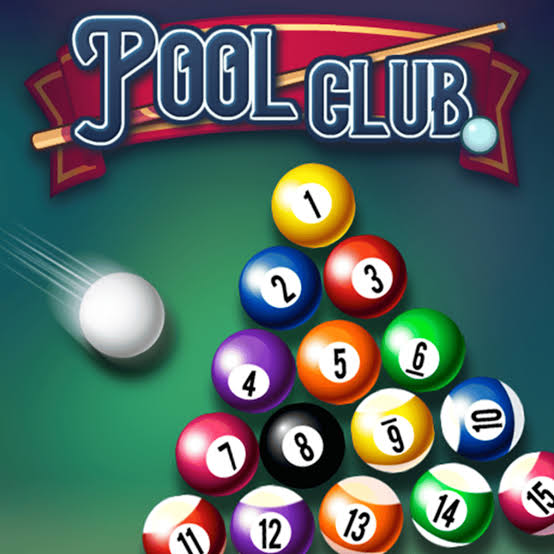


Pool Club
Pool Club is a timed single-player pool game where you aim shots, pocket balls, build combos and earn extra seconds to keep your run going.
Pool Club is a fast single-player pool game from Ravalmatic where you start with 90 seconds and try to pocket as many balls as possible before the timer reaches zero. Every successful pot gives you extra time, while quick consecutive shots can create Combos and Super Combos that extend the run even further.
The simple idea makes the game easy to start, but rushing every shot is the mistake I would avoid. A fast pot may add time, but leaving the cue ball in a poor position can make the next shot much harder. I found the game makes more sense when you think about the next ball before releasing the current shot.
| Game Detail | Information |
|---|---|
| Game | Pool Club |
| Developer | Ravalmatic |
| Genre | Pool, Sports, Skill |
| Gameplay Style | Timed solo pool with scoring and combos |
| Main Goal | Pocket as many balls as possible before time runs out |
| Starting Time | 90 seconds |
| Controls | Aim, drag to set power, release to shoot |
| Supported Devices | Desktop, phone and tablet |
| Original Publication | 2019 |
| Poki Release | March 2021 |
| Latest Poki Update | April 2021 |
| Current Poki Rating | 4.2/5 |
| Current Poki Votes | 752K+ |
| Multiplayer | No, single-player |
| Technology | HTML5 |
| Game Framework | Phaser |
Ravalmatic’s official page identifies Pool Club as an HTML5 single-player pool game built with Phaser and dates its publication to 2019. Poki currently lists the game at about 4.2 from more than 752,000 votes, although rating totals can change.
Beat the 90-Second Clock
Pool Club does not use a normal match against another player.
Instead, your opponent is the timer.
You begin with 90 seconds and need to keep the session alive by pocketing balls. Ravalmatic confirms that each successful ball gives additional time, meaning a strong run can continue well beyond the initial minute and a half.
This changes the usual pool rhythm.
You cannot spend unlimited time examining every angle, but firing without planning is not useful either.
The best balance is to identify a simple shot quickly, then leave the cue ball somewhere that gives you another realistic target.
How to Play Pool Club
The control system is built around aiming and shot strength.
First, line up the cue with the ball you want to hit.
Drag backward to increase the power of the shot.
Release to strike the cue ball.
The farther you pull, the stronger the shot becomes.
That sounds straightforward, but maximum power is rarely necessary. Softer shots can make the cue ball easier to control and often leave a better setup for your next attempt.
Every Pocketed Ball Buys More Time
Pocketing balls is important for two reasons.
It increases your score and keeps the timer alive.
The official game description explains that successful balls add seconds, allowing skilled players to extend a session for much longer than the original 90-second limit.
This creates a useful decision.
An easy nearby ball may not be worth as much strategically as another shot that leaves several easy balls available afterward.
When the timer is low, though, the safest available pot usually becomes the better choice.
Combos and Super Combos
Pool Club rewards consecutive successful shots.
Sink balls efficiently and you can create Combos and Super Combos, which provide additional bonus time.
This is where planning starts to matter more.
Before taking an easy shot, look around the table and decide what you would attempt afterward.
A good first pot that leaves an obvious second shot can be more useful than a difficult long shot that leaves the cue ball in an unpredictable position.
Do Not Scratch the Cue Ball
The cue ball is the white ball used to strike the other balls.
Pocketing it is a mistake.
Phaser’s original feature page for Pool Club specifically warns that sinking the cue ball costs valuable time.
That means a powerful shot into a crowded group is not automatically useful.
Even if an object ball goes into a pocket, losing control of the white ball can reduce the value of the shot.
This reflects one basic idea from real pool as well. The World Pool Association defines a scratch as a recognized pool foul, although Pool Club uses its own simplified timed scoring system rather than recreating a full competitive ruleset.
Aim Before Choosing Power
Direction and power should be treated separately.
First decide where the object ball needs to travel.
Then decide how strongly the cue ball needs to strike it.
I would avoid pulling the cue back fully for every shot.
More force can cause:
- the target ball to travel farther than expected
- the cue ball to rebound into an awkward position
- an easy follow-up shot to disappear
- a possible scratch
A shorter drag often gives enough power for a nearby pocket while leaving more control afterward.
Think One Shot Ahead
The timer encourages speed, but the strongest runs still need some planning.
Before shooting, check where the cue ball is likely to finish.
For example, imagine two balls are both easy to pocket.
One shot leaves the white ball against a cushion.
The other leaves it near the middle of the table.
The second option may create a much easier continuation.
This is the small decision that separates random potting from building a longer sequence.
For another sports game on Mopoga where aim and controlled power matter, Blumgi Ball uses slingshot-style basketball shots and rewards careful positioning rather than maximum force on every attempt.
Reading Angles
Pool Club is built around basic cue-ball and object-ball angles.
You do not need to calculate them mathematically.
Instead, look at three points:
the cue ball
the target ball
the pocket
Try to visualize a simple line from the target ball toward the pocket, then position the cue shot so the white ball contacts the correct side.
It becomes easier with repetition.
The main mistake is aiming directly at the pocket rather than thinking about where the object ball needs to travel after contact.
Clear Easy Balls First
When several balls are available, I would normally begin with the clearest pockets.
That has two advantages.
First, it keeps the timer moving.
Second, removing easier balls can open cleaner paths toward balls that were previously blocked.
Trying the hardest shot first can waste several seconds without producing anything.
Pool Club rewards keeping the run alive, so consistency is often more valuable than attempting one impressive shot.
When to Use More Power
Stronger shots still have a purpose.
They can help when:
- the target ball is far away
- another ball needs to be separated from a cluster
- the cue ball must travel farther for the next position
- a weak strike would not reach the intended pocket
The important part is using power because the shot needs it, not because the control allows it.
That distinction becomes more noticeable once you begin trying to maintain longer combos.
Pool Club Is Not Standard 8-Ball
Pool Club looks like traditional billiards, but its main mode does not reproduce a normal competitive 8-ball match.
There is no opponent taking alternating turns.
You are not trying to clear one assigned group before legally pocketing the 8-ball.
Instead, the goal is to sink as many balls as possible while protecting the clock.
The World Pool Association’s official rules describe competitive pool as using a cue ball to strike object balls into six pockets, with individual disciplines determining which balls are legal targets and how a match is won.
Pool Club borrows the table, cue and shot mechanics while turning them into a faster arcade challenge.
Scoring Gives Every Shot a Purpose
Ravalmatic confirms that Pool Club includes a dedicated scoring system alongside the timer.
That makes the game useful for short repeat sessions.
Even when a run ends, you immediately have something to improve next time.
You might aim to:
survive longer
clear more balls
build a larger combo
avoid cue-ball mistakes
beat your previous score
The rules remain the same, but your own result becomes the progression system.
Pool Club on Phone and Tablet
The current Poki version supports desktop, phone and tablet.
On desktop, aiming and shot strength work naturally with a mouse.
On touchscreen devices, the same basic drag-and-release concept can be adapted to finger input.
That makes Pool Club well suited to mobile play because it does not depend on a large collection of keyboard controls.
The game is built using Phaser, and Phaser’s official documentation explains that the framework is designed for HTML5 games running across desktop and mobile web browsers.
Built With Phaser
Ravalmatic identifies Phaser as Pool Club’s game framework.
Phaser is an open-source HTML5 framework designed specifically for browser games and supports Canvas and WebGL rendering across modern browsers.
That technical choice fits Pool Club well because the game needs to handle cue movement, ball motion, collisions and input without requiring a separate desktop installation.
Who Created Pool Club?
Pool Club was created by Ravalmatic.
The studio’s official portfolio lists Pool Club among its HTML5 games and describes it as a smooth solo pool experience built around a 90-second starting timer, bonus seconds and combos.
Ravalmatic has also created browser titles including:
- Merge Cakes
- Foot Chinko
- Cricket Hero
- Mafia Billiard Tricks
- Basket Champs
- Battleships Armada
- Chess Grandmaster
- Junior Chess
- Classic Minesweeper
Poki’s current developer catalogue connects these games with the same studio.
Pool Club Release History
The dates need a little clarification because different sites refer to different releases.
2019: Ravalmatic’s official portfolio gives 2019 as the game’s publication year.
June 27, 2019: Phaser featured Pool Club on its official site.
March 2021: Poki lists its edition as released in March 2021.
April 2021: Poki currently gives April 2021 as the latest update for its edition.
For that reason, 2019 is the better original publication year, while March 2021 should be treated specifically as the Poki release.
Is Pool Club Multiplayer?
No. Pool Club is a single-player game.
Ravalmatic explicitly describes it as a solo pool game, and the current Poki listing uses the same structure.
The challenge comes from beating the clock and improving your own score rather than competing against another live player.
If you prefer competitive sports games on Mopoga, Basketball Stars includes one-on-one and two-on-two arcade basketball as well as local two-player options.
A Better Way to Build a Long Run
I would approach a Pool Club run in this order.
Start with an obvious pocket rather than the hardest ball.
Keep the cue ball away from the pockets where possible.
After every shot, immediately identify the next target.
Use moderate power unless more force is clearly needed.
When the timer becomes low, prioritize a safe pot over a complicated setup.
When several simple balls are available, try to arrange them into a short sequence for a combo.
The goal is not to make every shot impressive.
It is to keep making successful shots.
Other Sports Games to Try
Pool Club works best for players who enjoy precision rather than fast character movement.
For another timing-focused sports game, Cricket World Cup simplifies cricket batting into carefully timed shots.
Players who prefer aiming with more movement and puzzle elements can try Blumgi Ball.
These games use different sports, but all three reward controlled input more than repeatedly pressing buttons as quickly as possible.
Related Categories
Pool Club fits naturally into:
- Pool Games
- Sports Games
- Skill Games
- Ball Games
- Arcade Games
- Classic Games
- Mobile Games
- Single-Player Games
Its strongest identity is a skill-based pool game because every run depends on aim, shot strength, cue-ball control and making decisions quickly enough to protect the timer.
What Makes Pool Club Different?
Pool Club removes most of the structure surrounding a normal pool match and concentrates on one challenge.
Keep pocketing balls.
Every successful shot gives you more time.
Fast sequences create bigger bonuses.
A cue-ball mistake costs you.
That creates a simple loop where the first few shots are easy to understand but maintaining a long run requires much better positioning.
The controls never become complicated.
Your decisions do.
About Pool Club
Pool Club takes the familiar mechanics of pool and turns them into a quick score challenge.
You begin with 90 seconds, aim your cue, control the strength of each shot and pocket balls to extend the timer. Combos and Super Combos can add even more time, while losing control of the cue ball can damage an otherwise strong run.
The part I would focus on most is not raw speed. A player who takes slightly longer to create two easy consecutive shots can often make better progress than someone who immediately hits the hardest available ball.
That combination of simple controls, short sessions and increasingly important positioning is what gives Pool Club its replay value.











Reviews
There are no reviews yet.