

Arrow Pathway
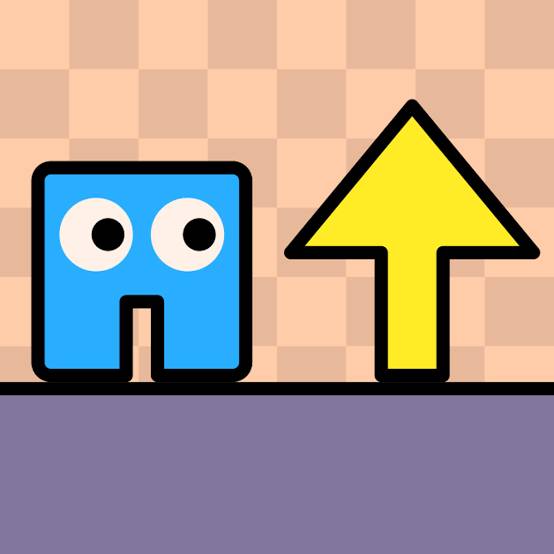
Arrow Pathway is a platform puzzle game where you do not directly control the character. Instead, you move directional arrows around each level to create a safe route toward the exit. Once the character starts moving, the arrows determine where it travels, so solving a level is mostly about planning the route correctly before committing to it.
Arrow Pathway is a platform puzzle game where you do not directly control the character. Instead, you move directional arrows around each level to create a safe route toward the exit. Once the character starts moving, the arrows determine where it travels, so solving a level is mostly about planning the route correctly before committing to it.
| Game Detail | Information |
|---|---|
| Game | Arrow Pathway |
| Developer | Robert Alvarez |
| Genre | Platform, Puzzle |
| Gameplay | Place directional arrows and guide the character to the exit |
| Controls | Mouse click or touch |
| Supported Devices | Desktop, phone and tablet |
| Release Date | November 2023 |
| Latest Update | December 2023 |
| Rating | 4.0 |
| Votes | 73K+ |
| Hint System | Yes |
| Main Mechanic | Directional path planning |
About Arrow Pathway
The goal in every level is simple: get the character to the exit. The unusual part is that you cannot move it in the traditional platform-game way.
You first reposition arrows around the stage. Once the character reaches one, its movement changes according to that arrow.
The mistake I would avoid is placing arrows one at a time without checking the entire route. A placement that solves the first obstacle can easily send the character into trouble a few seconds later.
Latest Arrow Pathway Update
Arrow Pathway was released in November 2023, with its latest listed update arriving in December 2023.
The game remains focused on its original puzzle concept rather than upgrades, currencies, or large progression systems.
Arrow Pathway Character
Arrow Pathway keeps its character system deliberately simple.
The character mainly acts as the moving piece you need to guide through each puzzle. There are no complicated abilities or equipment systems competing for attention, so most of your thinking stays focused on the arrows and level layout.
Arrow Pathway Gameplay
Each stage gives you arrows that can be moved to different positions.
Click an arrow to pick it up, move it where you think it belongs, and click again to place it. The character then follows the route created by those directional instructions.
The strongest approach is to trace the intended journey from the exit backwards. This often reveals where the final direction change must happen before you worry about earlier arrows.
Controls
- Click an arrow: Pick it up
- Click again: Place the arrow
- Touch: Select and place arrows on compatible devices
The control scheme fits both mouse and touchscreen play. MDN’s explanation of pointer events shows how modern web applications can handle mouse, touch, and pen input through a common input model.
The W3C Pointer Events Recommendation provides the underlying web standard for handling these different pointing devices consistently.
Arrow Pathway Arrows And Hints
Directional arrows are the game’s main puzzle tool.
Their placement determines what happens when the moving character reaches different parts of the level. Because of this, an arrow that looks correctly positioned can still be pointing the character toward the wrong next step.
Arrow Pathway also provides hints when a level becomes difficult. These can demonstrate how a puzzle should be completed rather than leaving the player stuck indefinitely.
Arrow Pathway Levels And Progression
Progress comes from solving one pathway puzzle after another.
New stages ask you to understand how arrow placement affects movement across increasingly awkward layouts. There are no character statistics to grind, so advancement depends on recognizing patterns and planning better routes.
I find this kind of design more rewarding when you resist using the hint immediately. One failed route often tells you more about the puzzle than repeatedly moving random arrows.
Who Created Arrow Pathway?
Arrow Pathway was created by Robert Alvarez, an independent developer known for compact puzzle and platform games.
His wider work shows a consistent preference for taking one mechanic and building increasingly difficult puzzles around it.
For example, the official Chessformer Steam listing identifies Robert Alvarez as both its developer and publisher. Chessformer combines chess-piece movement with puzzle-platform layouts.
His earlier Isotiles Steam release also credits him as developer and publisher and uses a minimalist grid-based puzzle structure.
App And Platforms
Arrow Pathway can be played on:
- Desktop computers
- Phones
- Tablets
Its simple click-and-place interaction suits touchscreens particularly well because the game does not depend on several keyboard buttons.
For technical context, MDN’s click-event documentation explains that a click can be generated through mouse, touch, keyboard, and other compatible input methods.
Games Like Arrow Pathway
Players who enjoy Arrow Pathway will usually prefer games where solving the route matters more than fast reactions.
Robert Alvarez has created several games with a similar puzzle-first approach, including Jumping Shell, Two Button Bounce, Block Toggle, Plactions, Time Clones, Chessformer, Teleport Jumper, Platform Countdown, Resizer, and Hop Warp.
The mechanics change between these games, but they share the same idea of teaching one unusual rule and then testing how well the player understands it.
About This Game
Arrow Pathway is less about controlling a character and more about controlling what happens to that character next.
That difference makes it useful for players who prefer thinking ahead instead of relying on quick platforming reactions. The best solution normally comes from studying the whole stage before placing the first arrow.
Related Categories
Arrow Pathway fits naturally into:
- Platform Games
- Puzzle Games
- Thinking Games
- Logic Games
- Path Games
- Casual Games
Its official listing places it primarily under Platform Games, although the actual challenge is strongly based around puzzle solving.
More Games From This Developer
Robert Alvarez has built a large collection of compact puzzle games, including Jumping Shell, Return Portal, Time Clones, Big Tall Small, Ledge Throw, One Button Bounce, Jumping Clones, Chessformer, Blockins, Teleport Jumper, Isotiles, and Sides of Gravity.
His PC catalogue also includes games such as BRDG, where the objective changes to pushing blocks and building bridges. The official BRDG Steam page confirms Robert Alvarez as both developer and publisher.








Reviews
There are no reviews yet.