

Half Moon
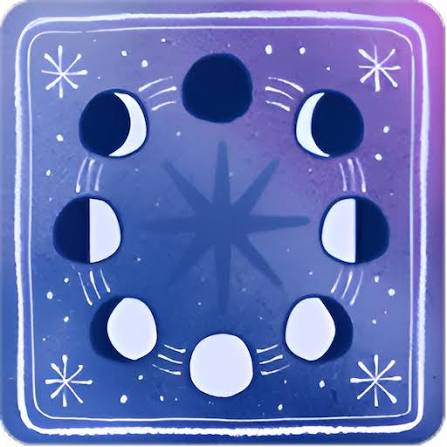
Half Moon turns the lunar cycle into a board-based card game. You and the Moon take turns placing cards representing phases such as New Moon, Waxing Crescent, First Quarter, Full Moon, and Waning Crescent.
Half Moon, officially called Rise of the Half Moon, is a strategy card game created as an interactive Google Doodle. You play against the Half Moon by placing lunar-phase cards on a board and connecting them in useful combinations. Matching phases, completing parts of the lunar cycle, and planning where each card goes are more important than playing quickly. Google first released the game on October 24, 2024.
| Game Detail | Information |
|---|---|
| Game | Rise of the Half Moon |
| Developer | Google Doodle Team |
| Genre | Card, Strategy, Educational |
| Gameplay | Connect Moon phases and score more points than Half Moon |
| Controls | Mouse or touchscreen |
| Game Mode | Single-player |
| Original Release | October 24, 2024 |
| Main Cards | Eight Moon phases |
| Special Feature | Unlockable Wildcards |
| Main Objective | Build valuable Moon-phase combinations and win each round |
About Half Moon
Half Moon turns the lunar cycle into a board-based card game. You and the Moon take turns placing cards representing phases such as New Moon, Waxing Crescent, First Quarter, Full Moon, and Waning Crescent.
Google created the game to celebrate the final half moon of October 2024 and later continued the idea with new monthly boards and Wildcards.
Google’s official Rise of the Half Moon page explains the original game and its lunar-cycle theme. Rise of the Half Moon on Google Doodles
You can also find other browser titles through Prothotts Live Game.
Half Moon Gameplay
Players place Moon-phase cards into available spaces and try to create useful connections before the Half Moon takes control of them.
A common mistake is placing a card simply because it creates an immediate match. It is often better to look at the surrounding spaces first because one well-positioned card can later become part of a longer lunar sequence.
Controls
Use the mouse to select and place cards on desktop.
On touchscreen devices, tap the card and available position to make your move.
There is no reaction-speed challenge. Most of the difficulty comes from understanding the cards and planning ahead.
Half Moon Cards And Matches
The game uses the eight familiar lunar phases, from New Moon through Waning Crescent.
Matching identical phases can score points, while complementary phases and longer lunar-cycle sequences can produce stronger combinations.
NASA lists the eight phases in their natural order and explains why the Moon appears different throughout its approximately 29.5-day phase cycle.
For a clear real-world explanation behind the cards, NASA’s Moon Phases guide is useful alongside the game. NASA Moon Phases guide
Half Moon Wildcards And Progression
Winning levels can unlock special Wildcards that change how later rounds play.
Google introduced different Wildcards with the monthly editions of the game. Later versions also brought new boards and seasonal Moon themes such as the Snow Moon, Worm Moon, Pink Moon, and Flower Moon.
It is usually better to save a powerful Wildcard until the board becomes difficult rather than spending it on an early position you could solve normally.
Who Created Half Moon?
Rise of the Half Moon was created by the Google Doodle Team.
Google credits Nate Sandhart and Helene Leroux for art, Nate Sandhart and Winnie Ma for UX and design, and Daniel Dovali, Jonathan Shneier, and Grant King for engineering. Nick Zammuto handled music and sound design.
Why Is It Called Half Moon?
What people commonly call a half moon is scientifically known as a quarter moon.
The name refers to the Moon being one-quarter or three-quarters of the way through its lunar cycle, even though half of the visible disk appears illuminated from Earth. NASA explains this distinction in its guide to the first and last quarter phases.
NASA explanation of the eight Moon phases
Games Like Half Moon
Players who enjoy Half Moon may also like card, tile, matching, and turn-based puzzle games where positioning matters more than fast controls.
What makes Half Moon different is that the card relationships come from a real astronomical sequence. Learning which phase follows another can genuinely make the game easier.
That educational element also makes it useful for players who prefer puzzles built around recognizable information rather than random symbols.
About This Game
Half Moon becomes more strategic once you stop thinking about each card separately.
A move that earns one quick point may occupy the exact space needed for a much longer lunar cycle later. Checking several possible connections before placing a card usually leads to stronger rounds.
The science behind those relationships is real. NASA explains that Moon phases happen because our view of the Sun-lit portion changes as the Moon moves around Earth.
NASA also provides a current lunar-phase visualization for 2026 for readers interested in comparing the game’s cards with the real Moon. NASA Moon Phase and Libration 2026
Related Categories
Half Moon fits naturally into:
- Card Games
- Strategy Games
- Puzzle Games
- Educational Games
- Space Games
- Google Doodle Games
- Single-Player Games
Its strongest feature is the combination of strategy and lunar knowledge. Knowing the correct order of Moon phases can help you recognize valuable card connections faster.
More Google Doodle Games
Google has created many interactive Doodles, but Half Moon stands apart because it became a recurring series rather than a single one-day game.
New monthly editions introduced different boards, Moon themes, and Wildcards while keeping the same central idea: connect lunar phases, plan stronger combinations, and score more points than the Half Moon.
Reviews
There are no reviews yet.