

Mosaic Puzzle Art
Mosaic Puzzle Art is a relaxing picture-matching puzzle where you choose colors, fill hexagonal tiles and recreate each reference image as accurately as possible.
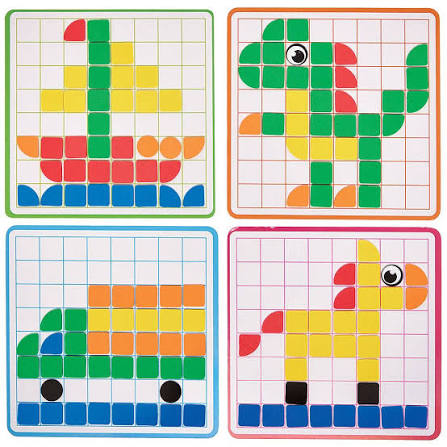
Mosaic Puzzle Art is a relaxing picture-matching puzzle game from TapLabGames where you recreate colorful artwork on a blank hexagonal grid. A finished reference picture appears beside your canvas, and your job is to choose the correct color and place it into the matching tile until both pictures look the same.
The controls are very simple, but larger pictures can become surprisingly easy to misread. I found that filling one color across the whole image is usually easier than constantly switching between colors. It reduces the number of decisions you need to make and makes missing tiles much easier to spot.
| Game Detail | Information |
|---|---|
| Game | Mosaic Puzzle Art |
| Developer | TapLabGames |
| Genre | Brain, Puzzle, Coloring |
| Gameplay Style | Reference-image copying with colored hexagonal tiles |
| Controls | Mouse click or touchscreen tap |
| Supported Devices | Desktop, phone and tablet |
| Poki Release | September 16, 2021 |
| Latest Poki Update | April 2022 |
| Current Rating | 4.2/5 |
| Current Votes | 163K+ |
| Multiplayer | Single-player |
| Main Goal | Recreate the reference image exactly |
Poki identifies TapLabGames as the developer and lists Mosaic Puzzle Art under brain and puzzle games. The current version works on computers, phones and tablets.
Copy the Picture One Tile at a Time
Every puzzle gives you two important areas.
One side shows the completed artwork.
The other side gives you an empty mosaic grid.
Your goal is to study the reference and reproduce the same arrangement on your own board.
There is no freehand drawing involved.
You select a color from the palette and place it into the correct hexagonal tile.
That makes Mosaic Puzzle Art closer to a visual matching puzzle than a normal drawing game.
Mosaic Puzzle Art Controls
The controls are designed to be easy.
Desktop: Click a color, then click the tile you want to fill.
Phone or tablet: Tap the color, then tap the correct tile.
Poki confirms the same click-or-tap system across its supported devices.
The MDN Pointer Events documentation explains how modern browser applications can handle mouse and touchscreen interaction through one input model.
Start With the Easiest Color
When a picture contains several colors, I would not begin randomly.
Look for the color that occupies the clearest area.
It might form:
- a large background section
- one obvious shape
- a repeated edge
- a central object
- a simple row of tiles
Fill that color first.
Once those tiles are complete, the remaining image becomes easier to read because there are fewer empty spaces left.
Count Rows Instead of Guessing
A reference image can look correct from a distance even when one tile is misplaced.
Counting helps.
If a row contains three red tiles followed by two blue ones, copy that exact pattern rather than relying only on appearance.
This becomes especially useful on larger mosaics where several similar colors appear close together.
The goal is accuracy rather than speed.
Hexagonal Tiles Change the Pattern
The board uses hexagonal cells instead of a normal square pixel grid. Poki and other current browser listings both describe the game around copying images through these colored tiles.
That changes how rows line up.
Hexagons often appear slightly offset from the rows above and below them.
I would therefore compare neighboring tiles carefully rather than assuming every vertical line continues straight down.
This is one reason the picture can look simple while still requiring concentration.
Use the Reference Image Constantly
The finished image is not only there to look at once.
Keep checking it while you work.
A useful method is:
Choose one color.
Find every obvious tile using that color.
Compare your board with the reference.
Correct any mismatch.
Then move to the next color.
This is usually easier than trying to remember the entire image before starting.
Do Not Rush Similar Colors
Some pictures use colors that are close in appearance.
That is where mistakes become harder to notice.
If two shades look similar, check their exact position before filling a large section.
I would rather place five correct tiles slowly than fill twenty quickly and then have to find where the pattern went wrong.
Mosaic Puzzle Art rewards careful comparison much more than fast tapping.
New Pictures Give You Different Patterns
The game contains multiple artwork puzzles rather than repeating one fixed picture.
Some current browser versions describe progression through a sequence of mosaic images that become available as earlier pictures are completed.
Different pictures change what you need to focus on.
One may use large solid sections.
Another may contain many small color changes.
The controls stay identical, but the pattern itself creates the difficulty.
A Better Way to Spot Mistakes
If your picture looks almost right but something feels wrong, stop filling new tiles.
Compare the two boards systematically.
Start in the top-left area.
Check one row at a time.
Move across the picture.
Then continue downward.
This method is much faster than staring at the whole mosaic and hoping the mistake becomes obvious.
The human eye is good at noticing overall patterns, but one incorrect tile can still hide inside a detailed image.
Mosaic Puzzle Art Is Not Color by Number
The game looks similar to color-by-number games, but there is an important difference.
You are not always given a number inside every tile telling you exactly which color belongs there.
Instead, you compare your empty canvas with the completed picture beside it.
That adds a visual memory and pattern-matching element.
You need to recognize where each color belongs rather than simply follow numbered instructions.
Relaxed Puzzle Pace
Mosaic Puzzle Art is not built around fast reaction times.
There are no enemies chasing you and no complicated character controls.
The challenge comes from observation and accuracy.
That makes it useful when you want a slower puzzle game where a mistake can be corrected by looking again rather than restarting an entire action sequence.
Current listings commonly describe it as a thinking or logic-oriented art puzzle rather than an action title.
Playing on Mobile
Mosaic Puzzle Art supports:
- Desktop
- Phone
- Tablet
Poki confirms all three device types.
Touchscreens work particularly well because every action involves selecting something visible on the screen.
Tap a color.
Tap the tile.
Repeat.
There is no need for virtual movement controls or a keyboard layout.
Larger Screens Can Make Detailed Pictures Easier
Although the game works on mobile, detailed mosaics may be easier to compare on a larger display.
A wider screen gives more room for both the reference image and your working canvas.
On a phone, I would slow down when the picture becomes dense.
Small cells can make similar colors or neighboring positions harder to compare quickly.
The core game remains the same on every device.
Who Created Mosaic Puzzle Art?
Mosaic Puzzle Art was created by TapLabGames.
Poki also associates the developer with several other puzzle games, including:
- Sweet World
- Mahjong Firefly
- Klondike Solitaire
- Mahjong Sweet Connection
- Jigsaw Surprise
The catalogue shows that TapLabGames works across several puzzle formats rather than focusing only on coloring games.
Mosaic Puzzle Art stands out because it combines picture creation with direct pattern copying.
Mosaic Puzzle Art Release and Update
Poki gives the following dates:
Release: September 16, 2021
Latest update: April 14, 2022
Other browser sites carried versions around a similar period, although some list different catalogue dates.
For the version covered here, the Poki dates are the clearest verified release and update information.
Current Mosaic Puzzle Art Rating
The current Poki listing shows approximately:
Rating: 4.2 out of 5
Votes: 163,000+
These totals are not permanent because additional players can continue voting.
Is Mosaic Puzzle Art Multiplayer?
No.
Mosaic Puzzle Art is a single-player puzzle game.
You complete each picture independently rather than competing against another live player.
You can still compare finished mosaics with friends outside the game, but there is no verified online or local multiplayer mode in the current browser edition.
A Simple Puzzle Routine
I would approach each picture in this order.
Study the completed reference first.
Identify the largest color section.
Fill that color.
Check the edges carefully.
Move to the second-most common color.
Compare each completed section with the reference.
Leave isolated single tiles until the larger shapes are correct.
Then perform one final row-by-row check.
This reduces the chance of having to search the entire picture for one misplaced tile at the end.
What Mosaic Puzzle Art Tests
The game mainly relies on:
- visual comparison
- pattern recognition
- color recognition
- attention to position
- patience
- basic spatial reasoning
It does not require traditional drawing ability.
Poki specifically notes that players do not need to be good at drawing because the challenge is following the reference accurately.
That makes the game approachable even if you would not normally choose an art game.
More Games From TapLabGames
TapLabGames has several other browser puzzle titles.
Mahjong Sweet Connection uses matching and tile removal.
Jigsaw Surprise focuses on assembling pictures from pieces.
Klondike Solitaire switches to card-based problem solving.
Sweet World uses a different colorful puzzle format.
The shared idea is simple controls paired with pattern-based decisions.
For Prothots internal linking, the strongest future links would be other puzzle, drawing, coloring, or matching games rather than unrelated action titles. I could verify your live G-Switch 4 page, but it is a gravity-running game and would not be a natural contextual link here. Your Prothots sitemap was not accessible through the current web reader, so I have not invented internal URLs.
Related Categories
Mosaic Puzzle Art fits naturally into:
- Puzzle Games
- Brain Games
- Coloring Games
- Art Games
- Drawing Games
- Matching Games
- Relaxing Games
- Mobile Games
- Single-Player Games
Its strongest identity is a visual puzzle because completing each artwork depends on reproducing a reference pattern accurately.
What Makes Mosaic Puzzle Art Different?
Mosaic Puzzle Art keeps the interaction extremely simple.
Choose a color.
Choose a tile.
Repeat.
What gives the game depth is the reference image.
Every placement needs to match another position exactly.
Hexagonal tiles make patterns slightly harder to read than a normal square grid, while larger images require more careful counting and comparison.
The challenge does not come from learning new controls.
It comes from noticing small differences.
About Mosaic Puzzle Art
Mosaic Puzzle Art combines coloring with a straightforward visual puzzle.
You look at a completed picture, select colors from the palette, and rebuild the artwork one hexagonal tile at a time.
The most useful habit is working systematically rather than randomly. Filling one color at a time and checking the picture row by row made mistakes much easier to catch than repeatedly switching between different parts of the image.
The result is a calm puzzle game that can be understood immediately but still requires careful attention once the mosaics become more detailed.






Reviews
There are no reviews yet.