
PoE Ninja: The Complete Guide to Using poe.ninja in Path of Exile (2027)


Path of Exile has a complicated trading system, hundreds of useful items, and thousands of ways to build a character. Even experienced players can struggle to decide what an item is worth, which skills are popular, or whether their equipment needs an upgrade. PoE Ninja makes these decisions easier by showing currency prices, item values, character builds, passive trees, and market trends in one place.
The website, available at poe.ninja, is a free community tool for Path of Exile and Path of Exile 2. It gathers game-related data and presents it through searchable pages, charts, filters, and character profiles. Instead of checking hundreds of individual listings or inspecting characters manually, players can compare useful information in a few minutes.
However, PoE Ninja is not a perfect pricing system or a complete build guide. A listed price may differ from the amount another player will actually pay. A character with impressive damage numbers may also require expensive equipment or special conditions to work properly.
The real advantage comes from knowing how to interpret the information rather than simply copying what appears on the screen.
This guide covers the features verified through November 2026 and explains how to use them during 2027. Future leagues, balance changes, new item categories, and website updates may change individual results.

By the end, you will understand how to:
- Check currency and unique item prices before trading.
- Read price charts and identify useful market trends.
- Find popular character builds without copying expensive setups.
- Compare passive trees, skill gems, equipment, and damage statistics.
- Use PoE Ninja alongside Path of Building and the official trade website.
- Study Atlas strategies and estimate farming returns.
- Avoid common mistakes when buying, selling, and upgrading equipment.
What Is PoE Ninja, and Why Do Path of Exile Players Use It?

PoE Ninja is a third-party statistics website that helps players understand the economy and character-building choices in Path of Exile. It is not developed as an official trading service by Grinding Gear Games, although it uses information associated with the games and their trading systems.
A key difference between Path of Exile and many other role-playing games is that most tradeable items do not have a fixed gold price. Players exchange currency items, including Chaos Orbs and Divine Orbs, with one another. Their exchange values change according to demand, supply, and league activity.
PoE Ninja helps solve the problem of following these changes manually. Its economy pages show estimated values and price history, while its build pages show how tracked characters are equipped and developed.
For example, imagine finding an expensive-looking unique ring during a mapping session. The item might be worth several Divine Orbs, or it might be a common version that sells for much less. Searching for its name on PoE Ninja provides an initial estimate and helps determine whether checking the official trade market is worthwhile.
The same idea applies to character builds. If you want to play a particular spell, you can see which ascendancies, support gems, passive skills, and unique items appear among tracked characters using that spell.
Players generally use PoE Ninja for several purposes:
- Market research: Check approximate currency, unique item, and crafting material values.
- Build research: See which skill and equipment combinations appear in tracked characters.
- Character improvement: Compare your equipment and passive tree against similar builds.
- Currency farming: Identify items and materials that may be worth collecting or selling.
- League planning: Study how prices and character choices change during a league.
- Trading preparation: Use price information before making a purchase or listing an item.
An important point is that PoE Ninja provides information, not a guarantee. It helps you make a better decision, but the final decision still requires understanding your character and the current market.
How PoE Ninja Works Behind the Scenes

PoE Ninja combines several kinds of data rather than relying on a single source. Its economy and build sections serve different purposes, so understanding where the information comes from helps prevent mistakes.
Economy information is collected and processed to provide estimated item prices and exchange rates. Depending on the game and item category, the website can use exchange-related information or listings from the official trading system. These sources do not always represent completed sales at exactly the displayed price.
Character information is collected through supported character and ladder data. Build statistics can also use Path of Building calculations to estimate damage and defensive properties.
This creates an important difference between market information and character information.
A currency value describes an estimated trading relationship. A build statistic describes a selected group of characters and their calculated properties. Neither should automatically be treated as a complete picture of every player or every transaction.
Consider these examples:
- A Divine Orb price describes an estimated exchange value, not a promise that every seller accepts that rate.
- A unique item’s listed value may not account for every possible modifier roll or special version.
- A popular skill may be common among high-level characters without being beginner-friendly.
- A damage figure can depend on calculation settings, enemy assumptions, and temporary effects.
- An older league snapshot may remain useful for research even when the current game balance has changed.
PoE Ninja is most reliable when used to narrow your research before checking the specific details that matter.
Getting Started With the PoE Ninja Website
The interface is designed around several main tools. You do not need to connect an account just to browse public economy information or examine tracked builds.
Open poe.ninja in your browser. You can then select the relevant game and navigate to the economy, builds, passive skill tree, or other available sections.
The game selector matters because Path of Exile and Path of Exile 2 have different characters, mechanics, items, and economies. Even when the two games use similar currency names, their market values must not be mixed.
For a first visit, use this simple approach:
- Select Path of Exile 1 or Path of Exile 2.
- Open the Economy section and choose the league you are playing.
- Search for a currency item or unique item you recognize.
- Open its detailed price information and check the chart.
- Visit Builds and select a skill or class that interests you.
- Open a character profile and examine its equipment, skills, and passive tree.
A common beginner mistake is staying on the wrong league. Standard, temporary challenge leagues, and special leagues can have very different markets. An item that is expensive in one league might be cheap or difficult to obtain in another.
Practical tip: Before reading any price, confirm the game, league, item category, and displayed currency. These four details are more important than the price itself.
Understanding the Main PoE Ninja Features
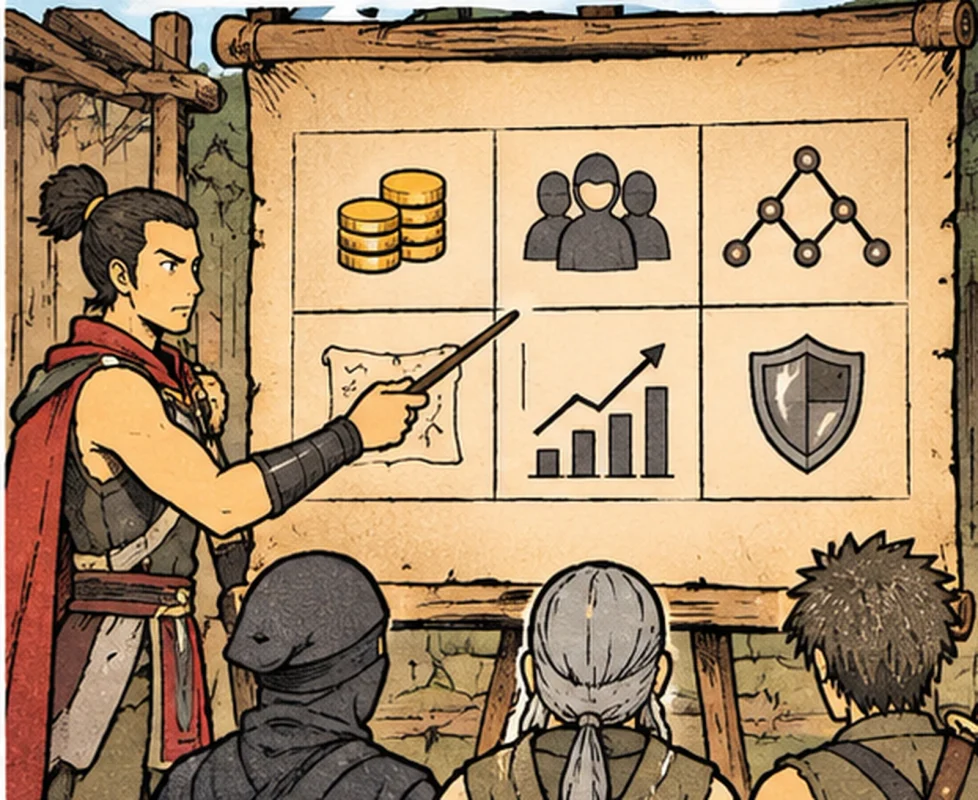
PoE Ninja offers more than a currency price list. Its major sections help with different parts of the game, and choosing the right one saves time.
The Economy section is useful when you have items to sell, need to purchase crafting materials, or want to compare prices. Builds is useful when selecting a character setup or learning how successful characters are constructed. Passive tree tools help when investigating skill point choices, while Atlas Trees in Path of Exile 1 helps with endgame farming plans.
The following table summarizes the main functions.
| PoE Ninja feature | What it shows | When to use it |
|---|---|---|
| Economy | Estimated currency and item values | Buying, selling, and checking market prices |
| Price history | Previous estimated prices and trends | Deciding whether a price is unusual |
| Builds | Tracked characters, equipment, skills, and statistics | Finding and comparing builds |
| Passive Skill Tree | Passive allocations and related statistics | Planning character improvements |
| Atlas Trees | Tracked Atlas allocations and farming choices in PoE 1 | Studying endgame farming setups |
| Path of Building integration | Build data and calculated character statistics | Examining damage, defenses, and upgrades |
| Character trade search | Prepared searches based on equipped items | Finding similar equipment |
| Time Machine | Available historical build snapshots | Comparing builds at different league stages |
| Path of Building sharing | Shareable build data and links | Sending character setups to other players |
These features become more useful when combined. For example, you can find a popular build, identify one of its important unique items, check that item’s market value, and then decide whether the build fits your available currency.
That workflow is better than selecting a character based on damage alone.
How to Check Currency Prices on PoE Ninja

Currency pricing is one of the main reasons players visit PoE Ninja. Path of Exile uses currency items for both trading and modifying equipment, so knowing their relative values helps you avoid poor exchanges.
Chaos Orbs and Divine Orbs are common reference currencies in Path of Exile 1 trading. Other currencies have different uses, values, and levels of demand. Which currency is used for displaying prices depends on the game, league, and website settings.
Suppose you have 400 Chaos Orbs and want to know how many Divine Orbs you can obtain. You could check individual sellers, but PoE Ninja gives you an initial view of the estimated exchange relationship.
Imagine that the current rate is 200 Chaos Orbs for one Divine Orb. Your 400 Chaos Orbs would then have a theoretical value of two Divine Orbs.
This is only an example, not a real November 2026 or 2027 market quotation.
The actual exchange rate may be different when you trade, and the amount available at a particular price can also vary.
Finding a Currency and Reading Its Value
Select the correct game and league before opening the Economy section. Find the currency category, then search for the currency you want to check.
Depending on the view, you may see a price, exchange relationship, trading activity information, or a small chart showing recent changes.
Pay attention to the following:
- Currency name: Make sure you are viewing the correct item.
- Price unit: Identify whether the value is shown in Chaos, Divine, Exalted, or another reference currency.
- Price direction: Check which currency you are giving and which one you are receiving.
- Price history: See whether the estimated value has moved recently.
- Market activity: Where available, review volume or listing information before assuming a price is easy to obtain.
The difference between buying and selling is especially important. The amount a seller wants for an item may be higher than the amount a buyer offers.
If you ignore that difference, a trade can look profitable on paper but lose currency once completed.
Why Currency Prices Keep Changing
Currency values respond to what players need and how much of each currency is available. Demand can rise when a particular crafting method becomes popular, while supply can increase when more players farm content that produces the relevant currency.
League age also matters. Early in a league, players are still building characters and gathering equipment. Later, many players have larger currency reserves and different goals.
The direction of a price change is not guaranteed because several forces can act at once.
Common reasons for movement include:
- A popular build requiring large amounts of a crafting material.
- A new farming strategy increasing the supply of certain items.
- Players reaching endgame content and spending more currency.
- Changes in crafting demand after a balance update.
- League progression changing what players want to purchase.
- Reduced trading activity toward the end of a league.
A useful habit is to check a currency’s recent price trend before exchanging a large amount. This cannot predict the future, but it can show whether the current estimate differs greatly from recent values.
Reading Price Charts Without Making Expensive Mistakes
PoE Ninja price charts help players see how estimated values change over time. A chart can reveal a rising trend, a sudden fall, or a period when prices remain relatively stable.
However, the most common mistake is assuming that a price increase will continue simply because the chart points upward.
Imagine a crafting material was worth five Chaos Orbs several days ago and is now worth twelve. It may be receiving more attention from players, but that does not guarantee it will reach twenty.
The increase could be temporary. More players may begin farming or selling it, reducing its value.
A price chart is a record of previous estimates, not a forecast.
What to Look for in a Price Graph
Start by looking at the size and timing of the price movement. A small change over several days is different from a sharp increase within a short period.
Then consider whether the item has a real reason to attract buyers.
A material used regularly in crafting may have steadier demand than an item needed for a narrow build setup. Likewise, a rare item may have a high displayed price but very few interested buyers.
When studying a graph, consider:
- Whether the price is rising slowly or changing sharply.
- Whether the movement has lasted several days.
- Whether trading activity supports the apparent price.
- Whether the item is important to current builds or farming methods.
- Whether a single unusual period is affecting the graph.
- Whether the price is high enough to justify the effort of selling it.
Example: You find several Scarabs that were previously worth three Chaos Orbs each but now show an estimated value of eight. Rather than immediately buying more, check the official trade market and see whether buyers are actively paying close to that amount.
If the live market is much lower, the chart may not represent what you can currently receive.
A particularly useful insight is to separate price movement from selling opportunity. An item can increase in estimated value without becoming easier to sell.
Using PoE Ninja to Price Unique Items
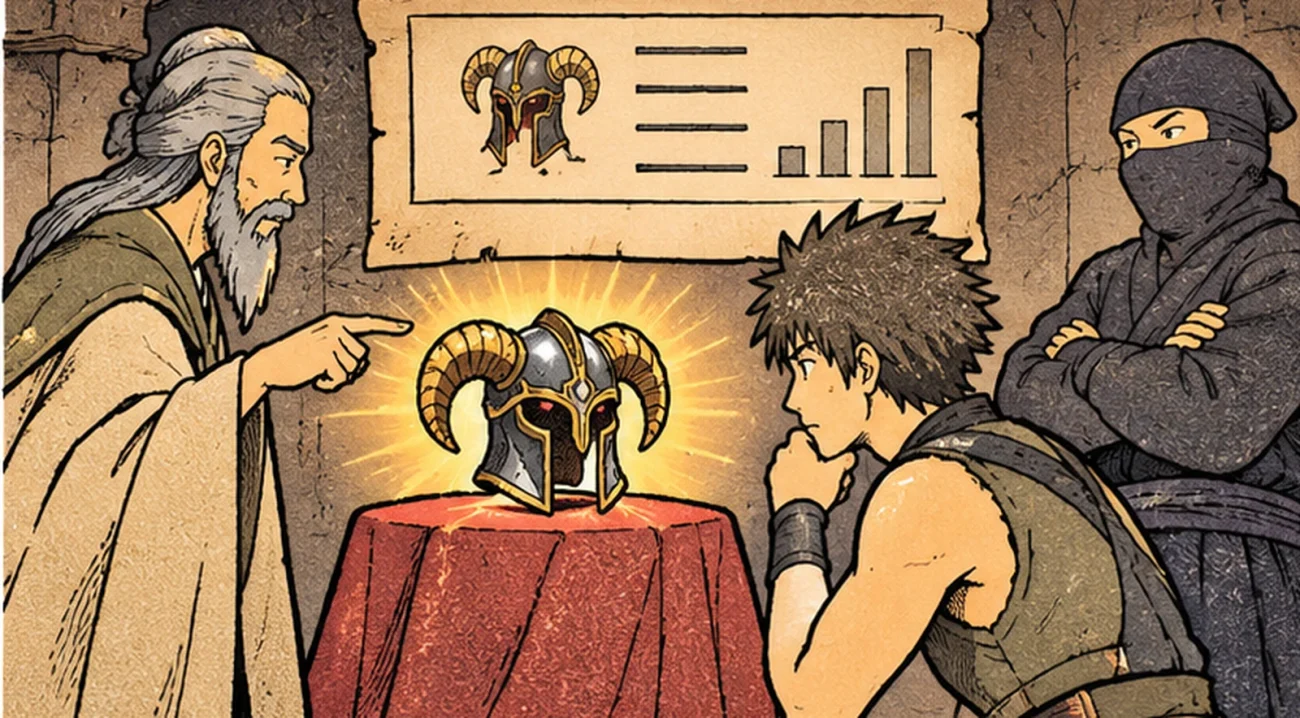
Unique items are popular because they often provide special effects that are not found on ordinary equipment. Some are central to specific builds, while others are common drops with limited market demand.
PoE Ninja helps players see general unique item values and price history. This makes it useful when deciding whether an item should be sold, stored, or used in a character build.
For example, suppose you find a unique helmet. You might see that the item type has an estimated value of 30 Chaos Orbs.
Before listing it for that amount, inspect its exact properties.
The same unique item can have different modifier rolls, corrupted versions, sockets, links, or other properties that affect what a buyer will pay.
A general category estimate cannot always capture these differences.
Checking Whether Your Unique Is Worth More
Search for the item’s exact name on PoE Ninja and examine the relevant category and details.
Next, compare your copy against other available versions. Where relevant, check the official trade site to find items with similar properties.
Important differences can include:
- Low or high modifier rolls.
- Corrupted or uncorrupted status.
- Special implicit modifiers.
- Socket and link configuration in PoE 1.
- Item level or other relevant item properties.
- Alternate or special versions of a unique item.
- Demand for the item in current character builds.
A high roll on an important modifier can make a meaningful difference, but not every high roll commands a premium.
The modifier must actually matter to players who use that item.
For example, if a unique provides a critical build-enabling effect, buyers may care more about that effect than an unrelated secondary modifier.
Selling tip: Treat the PoE Ninja estimate as your starting point. Use a matching official trade search to decide the final listing price.
Pricing Rare Items Requires a Different Method
Rare equipment is harder to price than ordinary currency or many unique items. Two rare rings can have the same item level and base type but completely different market values.
A ring with useful life, resistances, attributes, and damage modifiers may be valuable to several builds. Another ring with several unrelated modifiers may be difficult to sell.
PoE Ninja can help indirectly by showing which rare item properties appear in tracked character builds. It also offers character trade search tools that can prepare searches based on equipped items.
However, it should not be treated as a complete automatic rare-item appraisal service.
The best approach is to compare the exact modifiers buyers need.
When assessing rare equipment, look for:
- Useful combinations of explicit modifiers.
- Modifier tiers and numeric values.
- Whether the item has open prefix or suffix slots.
- The importance of the item base.
- Crafting potential and special influences, where applicable.
- How the item compares with currently listed equipment.
For example, a pair of boots with strong movement speed, maximum life, and useful resistances may be attractive because these properties work together.
A pair with individually impressive but poorly matched modifiers may be less valuable.
One practical approach is to find several characters using a similar item type, inspect the modifiers they value, and then search for comparable gear on the official trade website.
This connects build demand to actual pricing rather than relying on the total number of modifiers alone.
Finding Popular Character Builds With PoE Ninja
The Builds section shows character information from tracked players and lets you filter it by class, skills, items, passives, and other properties.
It is useful when you have a character idea but do not know how experienced players are building it.
For example, you may want to play a bow character but are unsure which support gems and defensive choices to use. Searching for the relevant skill lets you compare existing characters.
You can see whether tracked players usually choose a particular ascendancy, which unique items appear frequently, and which passive nodes are common.
However, popularity does not automatically mean a build is the best choice.
A popular build may require expensive equipment, strong game knowledge, or a character that has already reached a high level.
Selecting Builds That Match Your Situation
Start with the skill you want to use rather than sorting every character by the highest damage number.
After selecting a skill, narrow the results to the class or ascendancy you are considering.
Then examine several characters instead of copying the top result.
Consider these questions:
- Is the build intended for mapping, bosses, or general endgame content?
- Does it depend on an expensive unique item?
- Can the main skill function with cheaper equipment?
- How does the character recover life or energy shield?
- Does the build appear to have enough defensive layers?
- Are important support gems available to your character?
- Can you understand why the build uses its passive nodes?
The best character to study is often not the one with the highest damage. A slightly weaker character with more balanced equipment may provide a better model for your own progression.
Practical example: If the highest-ranked version of a skill uses several very expensive items, examine characters using the same skill without those items. This can reveal cheaper combinations and show which expensive upgrades are optional.
Understanding Build Popularity and the Meta
The term meta generally refers to strategies and builds that are considered strong or popular in the current game environment.
PoE Ninja makes parts of the meta visible by showing what tracked characters actually use. This is valuable, but the sample has limits.
Its tracked population does not represent every character created in Path of Exile. High-level ladder characters, connected accounts, and other eligible characters can be more visible than ordinary early-game players.
This creates a useful but selective picture of the game.
A skill that appears frequently among tracked characters might be strong, fashionable, efficient for reaching high levels, or especially attractive to dedicated players.
You cannot identify the exact reason from popularity alone.
What Popularity Statistics Can Tell You
Build popularity becomes more informative when you compare several details together.
For instance, a skill appearing across several ascendancies may be flexible. A skill concentrated in one ascendancy may depend on a specific interaction or class advantage.
A large difference between early and late league snapshots may suggest that players changed builds as they obtained more currency.
Useful signals include:
- Skills repeatedly appearing among tracked high-level characters.
- Ascendancies strongly associated with particular skills.
- Items used by a large share of characters in a selected group.
- Changes in skill use across available historical snapshots.
- Similar passive allocations among characters using the same mechanic.
- Differences between trade and Solo Self-Found environments.
A useful way to study the meta is to ask not only what players are using, but what they have in common.
If characters with very different equipment still share a particular defensive keystone, that choice may deserve closer attention.
If only heavily equipped characters use an expensive unique, it may be a late-game upgrade rather than a requirement for starting the build.
How to Read a Character Profile Properly
Opening a character profile reveals much more information than its level and damage value. You can inspect the equipment, skill setup, passive tree, and available calculated statistics.
The key is to read these elements as a connected system.
A character’s damage may come from weapon properties, passive points, support gems, critical strike scaling, or multiple interacting mechanics. Its survivability can depend on resistances, life, energy shield, armour, evasion, recovery, and other defenses.
Copying just one element may not produce the expected result.
Start With Equipment and Skills
Look at the character’s main damage skill and the items supporting it.
Identify whether any unique item changes how the skill functions. Then inspect the supporting gems and other important equipment modifiers.
A useful inspection sequence is:
- Main active skill and its support gems.
- Weapon or other important damage equipment.
- Unique items that appear essential to the build.
- Defensive equipment and resistance sources.
- Passive keystones and notable skills.
- Recovery methods and available calculated statistics.
Try to explain the purpose of every major item before buying anything.
If you cannot identify why a ring, weapon, or jewel is important, there is a risk of purchasing equipment that will not work properly with your current setup.
Compare Similar Characters
One of the strongest uses of PoE Ninja is comparing characters that use the same main skill but choose different equipment.
Suppose two characters both use a fire spell. One may focus on critical strikes while the other uses a non-critical damage setup.
Even if both have similar displayed damage, their passive trees and item requirements may differ significantly.
Comparing them can help answer questions such as:
- Which setup costs less to begin?
- Which one requires more specific equipment?
- Which provides better recovery or defenses?
- Which passive choices are essential?
- Which approach matches the equipment you already own?
This process turns a character profile into a learning tool instead of a shopping list.
Making Sense of DPS and Offensive Statistics
Damage per second, usually shortened to DPS, is one of the most visible build statistics. Players often compare builds using this single number.
That can be misleading.
PoE Ninja uses Path of Building-related calculations for character statistics, and the resulting DPS depends on the calculated skill and configuration.
Some attacks hit rapidly for smaller amounts of damage. Others hit less frequently but deal more damage per hit. Damage-over-time builds follow different rules, and some skills depend on multiple projectiles or other special mechanics.
A single displayed number cannot describe every part of real gameplay.
In September 2026, PoE Ninja added detailed offensive breakdowns for both Path of Exile games. These features allow players to inspect important damage sources and view statistics such as attack or cast rate, critical strike chance, and other relevant skill properties.
How to Compare Damage More Carefully
Start by confirming that you are comparing the same skill and a similar type of setup.
Then look beyond the main DPS number.
Useful information may include:
- Average damage per hit.
- Attack speed or cast speed.
- Critical strike chance and multiplier.
- Damage types and conversion.
- Hit chance for attacks.
- Projectile count and projectile behavior.
- Damage-over-time contribution.
- Conditions required for damage bonuses.
For example, one character might show higher theoretical damage but rely on temporary effects. Another may deal lower peak damage while maintaining its damage more consistently.
In regular mapping, the second character could feel better.
This is an interpretation of possible gameplay, not something a DPS ranking proves by itself.
Useful rule: Never spend a large amount of currency solely because another character has a larger DPS figure. Check which changes create that damage and whether your character can reproduce them.
Checking Defensive Statistics Before Copying a Build
Players sometimes choose the highest-damage character they can find and then wonder why their own version dies frequently.
The problem is often incomplete defensive planning.
PoE Ninja provides defensive statistics and source breakdowns that can help explain how a character reaches its displayed values.
Its June 2026 defensive update introduced ways to trace certain statistics back to equipment, passives, and other sources. Armour and evasion graphs also help explain how those mechanics respond under different conditions.
These tools are valuable because defensive strength is not represented by maximum life alone.
A character with a large life pool but weak mitigation and recovery can still struggle. Another character with less life may survive well because its defensive systems work together.
Reading Defensive Layers as a Group
Look at the character’s core life or energy shield pool, then inspect how it reduces or avoids damage.
Next, consider recovery and other defensive mechanics.
Depending on the build, relevant information can include:
- Maximum life or energy shield.
- Elemental and chaos resistances.
- Armour and evasion.
- Block or spell suppression.
- Recovery through regeneration, leech, or other effects.
- Maximum resistance modifiers.
- Defensive charges and conditional protection.
- Calculated maximum hit information, when available.
Remember that armour does not reduce every physical hit by a fixed percentage. Its effectiveness depends partly on the size of the incoming hit.
This is why looking only at an armour total can be misleading.
A useful comparison is to examine two characters using the same main skill, then identify which passive nodes and equipment modifiers explain their defensive differences.
You may find that a small change in the passive tree provides more practical benefit than another expensive damage upgrade.
Using Passive Skill Trees to Improve Your Character
Passive skill trees are a central part of both Path of Exile games. They determine a large share of a character’s strengths, weaknesses, and possible equipment combinations.
PoE Ninja provides interactive passive tree tools and build-related tree information so players can examine how tracked characters allocate points.
One particularly useful feature is the heatmap, which highlights how frequently passive nodes appear among the selected characters.
This can make important patterns easier to recognize.
For example, when looking at builds using the same spell, you may notice that many characters invest in a particular section of the tree. That section could provide useful damage, defensive bonuses, or access to a key mechanic.
However, common allocation does not always mean every character should take those nodes.
Using Heatmaps Without Copying Blindly
A heatmap shows frequency, not the reason for every choice.
To understand it properly, narrow your character selection before comparing passive allocations.
A good method is to:
- Choose a specific main skill.
- Filter by the intended class or ascendancy.
- Compare characters using similar equipment.
- Look for passive clusters shared across those characters.
- Identify important keystones and notable passives.
- Check whether your own equipment supports the same choices.
If a node is popular only among characters using a particular unique item, that node may not benefit your version.
Similarly, a passive cluster that looks unnecessary on its own may connect several important parts of the tree.
Practical tip: Before changing your passive tree, inspect the complete path to a desired node. A powerful notable can become inefficient if reaching it requires too many travel points.
Using Path of Building With PoE Ninja
Path of Building is a separate character-planning tool commonly used to evaluate Path of Exile builds. PoE Ninja works with Path of Building information and provides ways to inspect or share build data.
This combination is useful because PoE Ninja helps locate interesting character setups, while Path of Building allows more detailed testing of possible changes.
For example, imagine finding a character using the same skill as yours but dealing substantially more calculated damage.
You could simply copy its equipment. A better method is to import or reproduce the relevant build in Path of Building and check what actually creates the difference.
Perhaps the weapon is responsible for much of the improvement. Perhaps the character uses a different support gem or a passive cluster that changes how damage scales.
Testing these options helps you prioritize upgrades.
A Practical Upgrade Comparison
Suppose your character has enough currency for only one significant improvement.
You are considering a stronger weapon, a better amulet, or several passive changes.
Instead of guessing:
- Find comparable characters on PoE Ninja.
- Inspect their equipment and passive allocations.
- Open the relevant build data in Path of Building.
- Review the calculation settings.
- Test your possible upgrades individually.
- Compare damage and defensive changes.
- Check the current market cost of each option.
The most expensive item is not always the best upgrade.
A cheaper change can sometimes provide better results because it removes a specific weakness in the build.
One important limitation is that calculated values depend on assumptions. Configuration settings, enemy conditions, active effects, and unsupported interactions can change the outcome.
Treat Path of Building as a testing tool rather than an exact prediction of how every encounter will play.
Finding Similar Equipment Through Character Trade Search
PoE Ninja introduced character trade search functionality for Path of Exile 1 in April 2026 and Path of Exile 2 in May 2026.
This feature helps players search the official trading market for equipment similar to an item shown on a character profile.
Instead of manually copying every modifier, you can open a prepared trade search and adjust which properties matter.
This is particularly helpful when studying rare equipment.
For example, you might inspect a character wearing a ring with several useful defensive modifiers. An exact match may be unavailable or extremely expensive, but a similar ring with slightly weaker values could fit your budget.
Finding a Useful Alternative
Open the item on a character profile and use the available trade search control.
The interface allows relevant item properties to be included or excluded from the search. Depending on the game and item, it can also support suitable filters for modifier values and item properties.
A practical approach is to:
- Keep the modifiers essential to the build.
- Remove optional or low-value modifiers.
- Lower minimum values where acceptable.
- Search for items with the correct base or useful alternatives.
- Compare available listings and prices.
- Check whether the cheaper item still meets your character’s needs.
A common mistake is demanding an exact copy of a high-end character’s equipment.
That can produce few results and unnecessarily high prices.
Searching for the purpose of an item rather than an identical item often produces more useful options.
Using PoE Ninja Atlas Trees for Farming Plans
In March 2026, PoE Ninja introduced an Atlas Trees section for Path of Exile 1. It allows players to browse tracked Atlas passive allocations and study which endgame mechanics players have invested in.
Atlas passive choices can affect what content appears in maps and which rewards or mechanics a player focuses on.
For someone interested in currency farming, this provides a way to compare real character strategies rather than choosing every Atlas passive without a plan.
The tool includes filtering options, tree views, and allocation heatmaps.
Finding an Atlas Strategy That Fits Your Build
Start with the type of content your character can complete comfortably.
A fast character that clears large groups of enemies may prefer different farming content from a build designed mainly for difficult bosses.
Then inspect Atlas trees associated with the relevant mechanics.
Look for:
- Passive investment in the mechanic you want to farm.
- Keystones that change how the strategy functions.
- Supporting passive clusters.
- Mechanics that have been blocked.
- Relevant Scarab interactions.
- Additional passives needed to complete the setup.
The goal is not to copy every node from the first tree you find.
Instead, understand which nodes support the same farming objective.
A popular Atlas setup may require Scarabs, strong character equipment, or difficult encounters. It may also have been designed for a different stage of the league.
Choose the setup that your character can run consistently.
Estimating Farming Profit With PoE Ninja
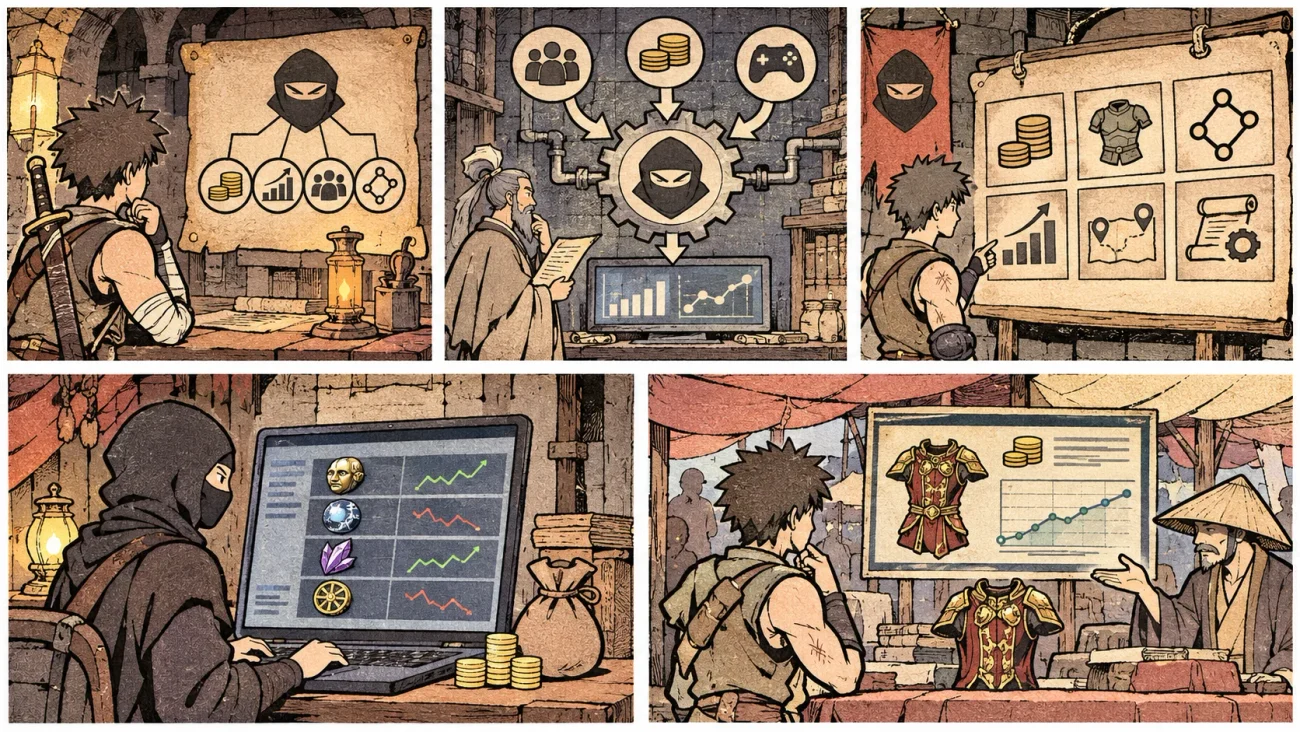
Currency farming is not simply about choosing the content that can drop the most expensive item. Consistency, speed, supply costs, and actual selling prices all matter.
PoE Ninja can help estimate the values of currency, Scarabs, fragments, fossils, essences, and other tradeable rewards.
However, the website does not automatically guarantee the profit of a farming strategy.
To judge a method fairly, you need to measure what you spend and what you actually receive.
A Sample Farming Calculation
Imagine running twenty maps with a specific Atlas setup. These numbers are fictional and demonstrate the method rather than describing a current league.
| Farming result | Example amount | Estimated value |
|---|---|---|
| Total map preparation cost | 20 maps | 120 Chaos Orbs |
| Scarabs and other setup costs | Combined | 180 Chaos Orbs |
| Currency drops | Combined | 340 Chaos Orbs |
| Sellable fragments | Combined | 220 Chaos Orbs |
| Other sellable materials | Combined | 160 Chaos Orbs |
| Gross return | All listed rewards | 720 Chaos Orbs |
| Total expense | Preparation and supplies | 300 Chaos Orbs |
| Estimated net profit | Return minus expense | 420 Chaos Orbs |
Under these assumptions, the strategy produces 420 Chaos Orbs in estimated profit across twenty maps.
That works out to 21 Chaos Orbs per map before considering other costs or unsold items.
But the result may be lower if the materials cannot be sold at their estimated prices.
Time matters too.
If the maps take one hour to complete, the theoretical return is 420 Chaos Orbs per hour. If they take three hours, the return falls to 140 Chaos Orbs per hour.
This leads to an important lesson: profit per hour can matter more than profit per map.
A cheaper farming strategy that your character completes quickly may outperform a difficult strategy with larger individual drops.
Why Your Results May Differ
Farming returns vary because Path of Exile rewards include randomness and market prices change.
A small sample may be affected by one valuable drop or a long period without useful rewards.
Before judging a strategy, consider:
- The number of maps completed.
- Time spent preparing and running maps.
- Currency spent on supplies.
- Value of rewards that actually sell.
- Time required to trade those rewards.
- Character deaths and failed content.
- Differences between expected and realized prices.
Record your results instead of relying on memory. Even a simple spreadsheet can reveal whether a farming plan is genuinely productive.
Following Market Changes During a New League
A new Path of Exile league often creates a fresh trading environment. Players begin with limited supplies, develop characters, and gradually move toward more demanding content.
As the league progresses, both demand and supply change.
This creates opportunities to use PoE Ninja for planning, but it also creates risks if you treat previous league patterns as guarantees.
For example, an item that was expensive early in one league may be inexpensive in the next because a balance patch changes its usefulness.
Likewise, a crafting material may become more valuable because players find a new way to use it.
Early League Planning
During the opening stage of a league, many players focus on reaching maps, improving basic equipment, and completing their first character setups.
This can create demand for certain useful items even when those items are not particularly rare.
PoE Ninja can help you watch these changes.
Useful habits include:
- Checking whether your league and item category are correct.
- Following the price of materials you regularly obtain.
- Reviewing which builds are becoming common.
- Comparing equipment requirements before choosing a build.
- Avoiding purchases based only on prices from previous leagues.
If an item is rising rapidly, try to understand why before buying it.
A strong increase may reflect real demand, but it can also reverse quickly.
Mid-League and Late-League Planning
Later in a league, more players may have access to advanced crafting methods and expensive equipment. The market can begin to favor different types of items.
Some materials may become easier to obtain, while specialized equipment remains valuable to players completing advanced builds.
The exact result depends on the league mechanics and player activity.
A useful approach is to monitor a small group of items connected to your own farming strategy.
There is no need to track every item in the game.
For example, if you regularly farm a mechanic that rewards crafting materials, follow the main materials you actually collect. You will gain information relevant to your own play rather than being distracted by unrelated market movements.
Using Historical Builds and the Time Machine
PoE Ninja’s historical build features can help players see how character choices changed during a league.
This matters because a character that is effective in the opening days may look very different several weeks later.
Players often replace temporary equipment, change passive allocations, and shift toward more specialized damage or defensive setups as they gain resources.
Historical snapshots help show this development.
Comparing Early and Late Character Setups
Suppose you want to understand how a particular skill develops from a league starter into a more expensive endgame build.
Look for available snapshots from different points in the league and compare similar character groups.
Focus on:
- Changes in frequently used unique items.
- Changes in support gems or passive choices.
- Differences in defensive statistics.
- The appearance of expensive late-game equipment.
- Whether characters continue using the same main skill.
- Whether certain ascendancies become more common.
Historical data can help separate early requirements from later upgrades.
For example, if an expensive unique appears frequently in late snapshots but not in early ones, that is a reason to investigate whether it is an upgrade rather than a requirement.
It is not proof by itself. The characters in different snapshots may not be the same people, and other factors can influence the results.
Still, comparing stages is often more helpful than copying a finished build without understanding how it developed.
How to Use PoE Ninja for Solo Self-Found Characters
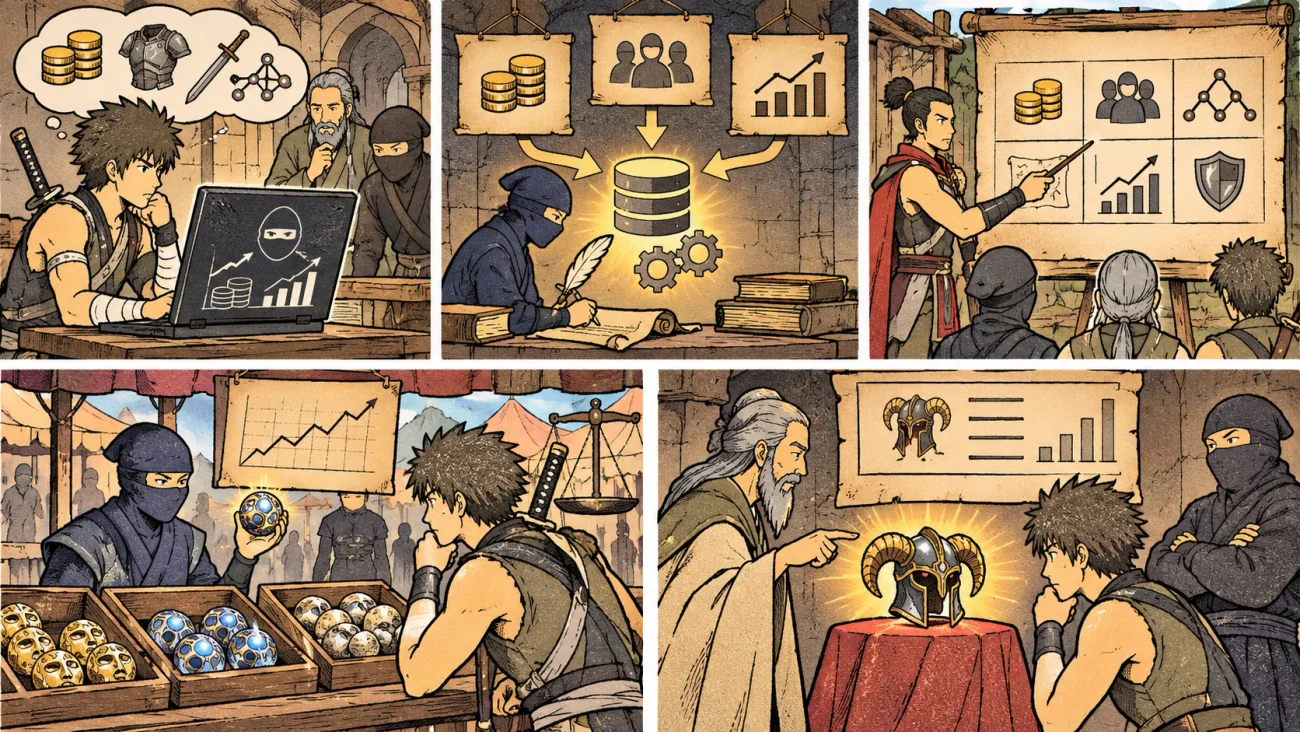
Solo Self-Found, commonly called SSF, changes how players approach equipment because they cannot depend on normal trading with other players.
In this environment, market prices are less useful for immediate decisions. You cannot simply purchase a missing unique item or crafting material from another player.
However, PoE Ninja remains useful for studying character setups and seeing how tracked SSF players solve equipment problems.
The most useful question changes from “How much does this item cost?” to “Can I reasonably obtain or replace what this build needs?”
Choosing an SSF-Friendly Build
Start by filtering for the relevant SSF league or character group where available.
Then look for builds that function without several highly specific rare items.
Inspect whether players use obtainable equipment alternatives and whether their damage depends on difficult crafting outcomes.
Good questions include:
- Does the build require a specific unique item?
- Can basic rare equipment provide enough life and resistance?
- Are the main skill and support gems practical to obtain?
- Does the passive tree offer useful damage without expensive gear?
- Can the character progress before receiving rare upgrades?
- What defensive choices are common among similar SSF characters?
One useful insight is that SSF builds can show how characters function with limited access to equipment.
But even an SSF leaderboard character may have obtained rare items through extensive farming.
Do not assume that every item shown is easy to obtain just because the character found it without trading.
Comparing Path of Exile and Path of Exile 2 on PoE Ninja

PoE Ninja supports both Path of Exile 1 and Path of Exile 2 within the same website.
The PoE 2 tools were previously associated with a separate site, but the services were brought together under poe.ninja in 2025.
Both games have economy and build-related information, but they do not share identical mechanics or market conditions.
This makes it important to check which game is selected whenever you follow a link or compare an item.
Important Differences When Using the Tools
For Path of Exile 1, players can use the economy, builds, passive tree, and Atlas Trees sections.
Path of Exile 2 also has economy and build research features, including its own passive tree and character trade search.
Its economy section uses currency exchange data for relevant categories, while unique item pricing was expanded in 2026 using official trade information.
The experience may look similar, but values from one game should never be applied to the other.
Keep these distinctions in mind:
- Select the correct game before searching.
- Confirm that the item exists in the selected game.
- Check the league separately for each game.
- Do not assume that similar currencies share the same value.
- Use the appropriate Path of Building or build-planning workflow.
- Expect item categories and supported mechanics to differ.
For players switching between the two games, the game selector is one of the most important controls on the site.
Common PoE Ninja Mistakes That Cost Players Currency
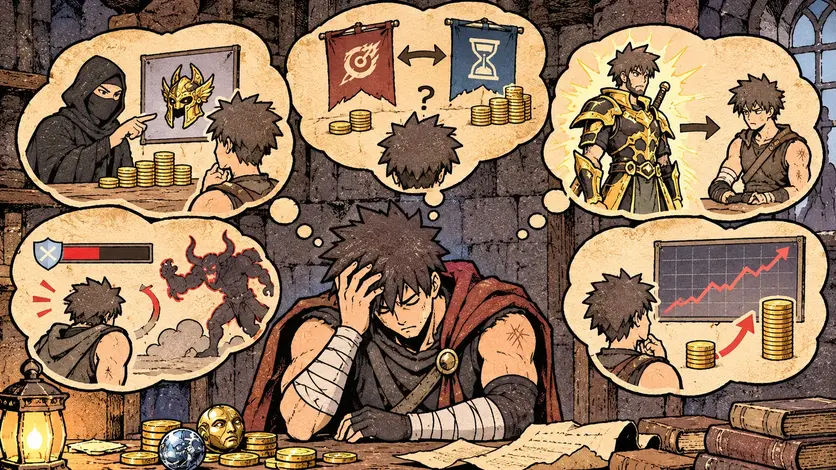
PoE Ninja can save time, but incorrect interpretation can lead to unnecessary spending and poor build choices.
Most problems are not caused by the website itself. They happen when players treat an estimate or ranking as a complete answer.
Copying the Highest-Damage Character
The character with the highest displayed DPS may rely on extremely expensive equipment or unusual settings.
Copying only its main skill will not reproduce the damage.
Instead, review the complete equipment and calculation details, then find a version that fits your budget.
Treating Every Price as a Completed Sale
Economy estimates do not guarantee that an item will sell immediately at the displayed value.
Some markets have limited activity, and individual listings can differ considerably.
Always check the exact item on the official trade market before making an expensive decision.
Mixing Different Leagues
Prices can differ substantially between leagues.
Make sure the displayed league matches the one you are playing before using a price to buy or sell.
Ignoring the Cost of a Build
A build might look attractive until you check its weapon, jewels, and other important items.
Estimate the cost of the complete functional setup rather than only the main unique item.
Overreacting to Price Movements
A sharp price increase does not guarantee future profit.
Buying materials simply because they recently increased in value can be risky, especially if trading activity is limited.
Forgetting Defensive Requirements
A character with impressive damage can still struggle if it lacks suitable defenses and recovery.
Inspect life, resistances, mitigation, avoidance, and recovery instead of focusing only on damage.
Assuming Popularity Means Beginner-Friendly
Tracked high-level characters are not necessarily representative of ordinary starting characters.
Use popularity data to identify ideas, then check whether the build matches your knowledge, budget, and goals.
Practical PoE Ninja Tips for Experienced Players
Once you understand the basic tools, PoE Ninja becomes more useful for answering specific questions.
Instead of checking the homepage without a clear purpose, start with a problem you want to solve.
For example, you may want to know why your damage is lower than similar characters, whether a particular item is worth selling, or which Atlas setup supports a chosen farming mechanic.
A focused search usually provides better information.
Compare Characters With Similar Equipment Budgets
One useful method is to examine characters that do not use a very expensive unique item.
Exclude that item from the build filters and inspect the alternatives.
This can show how players approach the same skill without relying on the most costly setup.
Look for Shared Mechanics, Not Just Shared Items
When several characters use similar passive nodes, gems, and defensive choices, try to identify the mechanic connecting those choices.
Understanding the interaction is more valuable than copying a complete item list.
Track Only Items Relevant to Your Farming
You do not need to follow every changing currency value.
Choose the items that regularly appear in your inventory and review their prices before selling them in bulk.
This keeps market research manageable.
Compare Estimated Profit With Actual Sales
If you calculate farming returns using PoE Ninja prices, record the amount you receive when you sell those items.
The difference helps reveal whether your estimated profit is realistic.
Study Unusual Character Setups
The most popular build is not always the most interesting.
Using exclusions and specific filters can reveal less common setups that still meet your requirements.
These characters may provide ideas for solving a particular problem without following the standard approach.
Frequently Asked Questions About PoE Ninja
Is PoE Ninja Free to Use?
Yes. The public economy, build research, and related browsing features are available without paying a subscription.
You can check item prices and study tracked builds without connecting your game account.
Useful starting points include:
- The main website for general tools.
- Economy pages for currency and item information.
- Builds for character research.
- Documentation for feature explanations.
Is PoE Ninja an Official Path of Exile Website?
No. PoE Ninja is a community-made website, separate from Grinding Gear Games.
It uses available game-related information to provide statistics and useful research tools.
For actual trading and official game information, players should use the appropriate Path of Exile services.
Can I Trade Items Directly Through PoE Ninja?
PoE Ninja is primarily an information and research tool, not a direct replacement for the official trading service.
Its trade search features can open prepared searches on the official trade website.
For a purchase, check the actual listing and follow the game’s supported trading process.
Why Is My Character Not Showing on PoE Ninja?
Not every character is included automatically in the tracked build results.
Visibility depends on supported character sources, ladder eligibility, account settings, and other collection conditions.
The site also provides account-related features for connecting and managing characters.
If your character does not appear:
- Check the correct game and league.
- Review the relevant character listing documentation.
- Confirm that your character profile is eligible and visible.
- Check available account and privacy settings.
- Allow for differences between character refreshes and build snapshots.
A missing character does not automatically indicate a bug.
Are PoE Ninja Prices Always Accurate?
No. Prices are estimates based on available information, and the real trading market can differ.
The exact item, league, time, listing activity, and buyer demand affect the amount you may receive.
Use the website to estimate value and compare trends, then verify expensive trades through the official market.
Can Beginners Use PoE Ninja?
Yes, although the large number of item categories and character statistics can initially seem confusing.
Beginners should start with currency prices and simple character comparisons.
A useful learning routine is to check one item price, study one character using your main skill, and identify one practical improvement.
Does PoE Ninja Work for Path of Exile 2?
Yes. The website supports Path of Exile 2 economy and build research.
Its tools and supported categories differ from Path of Exile 1, so always select the correct game before using the results.
Does PoE Ninja Show Every Character Build?
No. The build section contains tracked characters based on available and eligible data sources.
It does not represent a complete record of every character created by every player.
This matters when interpreting popularity statistics.
Can PoE Ninja Help Me Earn More Currency?
It can help you make better decisions about farming rewards, buying materials, and selling items.
However, it does not guarantee profit.
A useful strategy still depends on your character, the chosen content, your speed, expenses, and whether the rewards can be sold.
Should I Follow PoE Ninja Builds Exactly?
Usually, no.
A tracked character is a useful example, but it may have different equipment, progression, and goals from yours.
Understand which items and passive choices are essential before copying the build.
Getting Real Value From PoE Ninja in 2027
PoE Ninja is most useful when treated as a research tool rather than a source of automatic answers. It can show what items are worth approximately, which characters use certain skills, and how tracked players build their equipment and passive trees.
The strongest advantage is the ability to connect economic information with character research.
You can find a promising build, check the cost of its important equipment, study alternatives, and test possible upgrades before spending currency. You can also examine farming rewards, compare Atlas setups, and use historical information to understand how player choices change.
For regular use, follow a simple routine:
- Check your game and league before reading any data.
- Use item prices as estimates rather than guaranteed sale values.
- Compare several characters instead of copying one high-ranked build.
- Study offensive and defensive statistics together.
- Test meaningful equipment changes with suitable build-planning tools.
- Measure farming profit using real costs and actual sales.
- Recheck website features and league information when major updates arrive.
The main lesson is that PoE Ninja provides the data, but knowing what to do with that data is what makes it valuable. When used carefully, it can reduce wasted currency, improve character planning, and help players make more informed decisions throughout Path of Exile.
Sources and Further Reading
The factual website features and historical updates discussed in this guide were checked against the following primary sources. The price examples and farming calculations are illustrative rather than live market data.
- PoE Ninja official website: https://poe.ninja/
- PoE Ninja documentation: https://poe.ninja/docs
- PoE Ninja API reference: https://poe.ninja/docs/api
- PoE Ninja news and feature updates: https://poe.ninja/posts/
- Offensive Stats and Main Skill Traits: https://poe.ninja/posts/offensive-stats-and-main-skill-traits
- Defensive Stat Breakdowns: https://poe.ninja/posts/defensive-stat-breakdowns
- Introducing Atlas Trees: https://poe.ninja/posts/atlas-trees
- Path of Exile 1 Character Trade Search: https://poe.ninja/posts/poe1-character-trade-search
- Path of Exile 2 Character Trade Search: https://poe.ninja/posts/poe2-character-trade-search
- Path of Exile official website: https://www.pathofexile.com/